5 Mistakes People Make When Using A Hair Dryer Every Day
5 Mistakes People Make When Using A Hair Dryer Every Day
Using a hair dryer every day is part of many people's morning routine. It can save time, create volume, smooth frizz, and make styling much easier.
But daily blow-drying can also become a problem when the same mistakes are repeated over and over.
The good news is that 5 Mistakes People Make When Using A Hair Dryer Every Day are surprisingly easy to fix.
From using excessive heat to holding the dryer too close to the hair, small changes in your drying routine can help reduce unnecessary heat exposure and improve your styling results.
The American Academy of Dermatology recommends using low or medium heat and a heat-protective product because excessive heat can damage hair.
In this guide, we will explain the 5 Mistakes People Make When Using A Hair Dryer Every Day, why they matter, and how to build a safer daily hair-drying routine.

What Are the 5 Mistakes People Make When Using A Hair Dryer Every Day?
The five most common mistakes are:
- Using the highest heat setting every day
- Holding the hair dryer too close to the hair
- Keeping the airflow in one spot for too long
- Drying soaking-wet hair with maximum heat and speed
- Ignoring hair type, attachments, and regular hair dryer maintenance
These mistakes can contribute to dryness, frizz, roughness, breakage, and unnecessary heat exposure.
A 2011 study examining repeated hair-dryer use found that higher temperatures were associated with greater surface damage to the hair shaft. The researchers also found that using the dryer farther away and keeping it moving resulted in less damage than very close, high-temperature drying.
1. Using the Highest Heat Setting Every Day
One of the biggest mistakes people make when using a hair dryer every day is assuming that hotter means faster and better.
It may feel like high heat gets the job done quickly, but repeated excessive heat exposure can make hair feel dry, rough, brittle, or frizzy.
The American Academy of Dermatology recommends using low or medium heat settings and protecting hair from excessive heat.
Why High Heat Can Damage Hair
Hair is made primarily of keratin and has a protective outer cuticle.
Repeated exposure to high temperatures can affect the structure and appearance of the hair surface.
Research on hair-dryer heat found that hair-surface damage increased as temperature increased.
This is particularly important if you use a hair dryer every morning.
One high-heat session may not seem significant, but repeated exposure can add up.
A Better Daily Hair Dryer Temperature Strategy
Instead of automatically choosing the hottest setting:
- Start with medium heat.
- Use high airflow when appropriate.
- Reduce heat as the hair becomes drier.
- Finish with a cooler airflow if your dryer provides a cool-shot function.
- Avoid keeping hot air directly against one section of hair.
The goal is not to eliminate blow-drying.
The goal is to use enough heat to dry and style your hair without unnecessary heat exposure.
2. Holding the Hair Dryer Too Close to Your Hair
The second mistake in the 5 Mistakes People Make When Using A Hair Dryer Every Day is holding the dryer too close to the hair.
This often happens when people want faster drying.
However, moving the dryer closer increases the intensity of heat reaching a smaller area.
Why Hair Dryer Distance Matters
A study examining hair-dryer damage compared different drying distances and temperatures. Hair dried at a closer distance and higher temperature showed more surface damage than hair dried farther away with continuous movement.
This makes distance an important part of a safe hair dryer routine.
How Far Should You Hold a Hair Dryer?
There isn't one universal distance that works for every dryer, hair type, and setting.
However, avoid pressing the nozzle against the hair.
Keep the dryer moving and avoid concentrating very hot airflow on one small area.
For example, the research mentioned above found less damage when a dryer was used at approximately 15 cm with continuous motion compared with closer, hotter drying conditions.
Think of it this way:
Move the air across your hair instead of cooking one section of hair.
3. Keeping the Airflow in One Spot for Too Long
Another common daily blow-drying mistake is keeping the hair dryer stationary.
You may be holding the dryer at a reasonable distance, but if the airflow stays on the same section for too long, that area receives concentrated heat.
Why Constant Movement Matters
Hair doesn't need to be blasted continuously from one direction.
Moving the dryer allows heat and airflow to distribute more evenly.
It can also make the drying process more comfortable.
The Best Hair Dryer Technique
Try this simple method:
- Divide your hair into manageable sections.
- Start with the roots.
- Keep the dryer moving continuously.
- Work gradually toward the ends.
- Avoid repeatedly heating the same section.
- Reduce the heat as the hair becomes mostly dry.
This approach is especially useful for people searching for how to use a hair dryer without damaging hair.
Use Your Brush and Hair Dryer Together
If you're creating a smooth blowout, avoid aggressively pulling the brush through wet hair.
Hair is more fragile when wet, and the AAD recommends handling wet hair gently.
A better approach is to remove excess moisture first and then begin detailed styling.
4. Drying Soaking-Wet Hair With Maximum Heat
The fourth mistake is turning on the highest heat immediately after stepping out of the shower.
This can make the drying process unnecessarily aggressive.
Why You Should Remove Excess Water First
Your hair doesn't have to go directly from dripping wet to fully styled with maximum heat.
Instead, gently remove excess moisture with a towel or T-shirt.
Do not aggressively rub the hair.
The American Academy of Dermatology specifically recommends gently wrapping hair in a towel or T-shirt to absorb moisture rather than roughly rubbing it dry.
A Better Pre-Drying Routine
Before turning on your hair dryer:
Step 1: Gently squeeze out excess water.
Step 2: Wrap the hair briefly in a towel or T-shirt.
Step 3: Allow some moisture to evaporate naturally when possible.
Step 4: Apply a suitable heat-protective product.
Step 5: Begin blow-drying with a controlled heat setting.
Step 6: Finish styling once the hair is dry.
This can reduce the amount of time your hair needs to spend under direct hot airflow.
5. Ignoring Your Hair Type, Attachments, and Hair Dryer Maintenance
The fifth mistake is assuming that one drying method works for everyone.
It doesn't.
Fine straight hair, thick hair, wavy hair, and tightly curled hair can require different approaches.
The AAD recommends choosing hair-care products and routines according to your hair type.
Consumer Reports also notes that different hair types can benefit from different dryer settings and attachments. For example, thick or long hair may benefit from a dryer that reduces drying time, while curly hair can benefit from a quality diffuser.
Choose the Right Hair Dryer Setting for Your Hair
Fine or Thin Hair
Fine hair generally doesn't require extremely high heat.
Try:
- Lower or medium heat
- Controlled airflow
- Shorter drying sessions
- Heat protection
- Concentrator attachment for smoothing
The objective is controlled drying rather than maximum temperature.
Thick or Long Hair
Thick hair naturally takes longer to dry.
Instead of simply increasing heat, look for strong and consistent airflow.
A dryer with multiple speed and heat settings gives you more control.
Consumer Reports recommends looking for a dryer with at least three heat settings and appropriate attachments for different hair types.
Curly or Wavy Hair
Curly hair can become frizzy when exposed to aggressive airflow.
A diffuser can help distribute airflow more gently and support curl definition.
Avoid constantly disturbing the curl pattern while drying.
For curly and textured hair, handling technique matters just as much as the dryer itself.
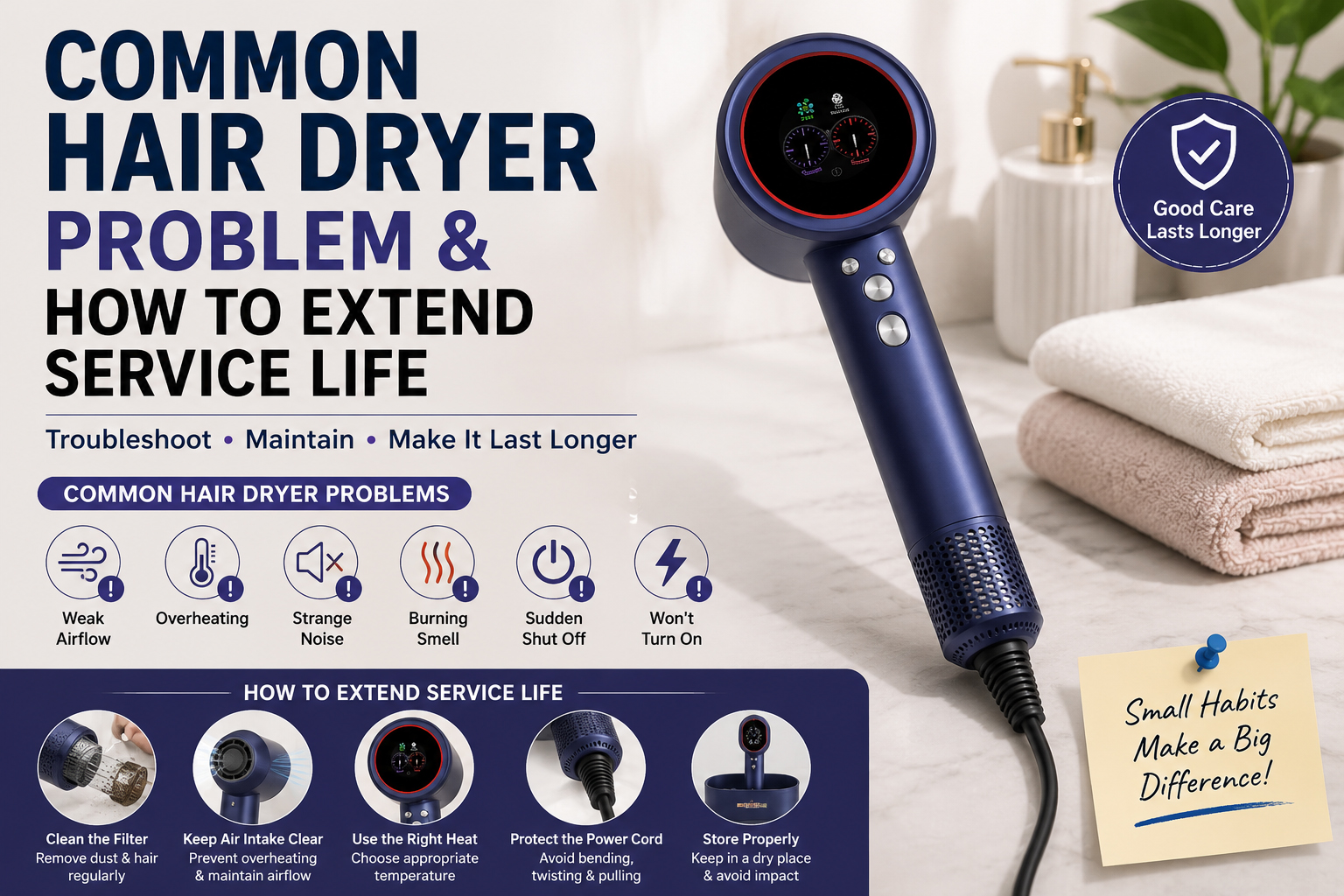
Don't Forget Hair Dryer Maintenance
Your hair dryer also needs maintenance.
Dust, lint, and hair can accumulate around the air intake and filter.
Restricted airflow may affect how efficiently the dryer operates.
Simple Hair Dryer Maintenance Checklist
Check your dryer regularly for:
- Blocked air intake
- Dust around the filter
- Hair trapped near the rear vent
- Damaged power cord
- Loose attachments
- Unusual noise
- Burning smells
- Unexpected overheating
If the dryer suddenly becomes unusually hot, noisy, or weak, don't simply compensate by increasing the heat.
The problem may be airflow restriction or equipment wear.
How to Use a Hair Dryer Every Day Without Damaging Your Hair
Now that we've covered the 5 Mistakes People Make When Using A Hair Dryer Every Day, let's turn those lessons into a simple daily routine.
Step 1: Remove Excess Water
Don't start with completely dripping-wet hair if you can avoid it.
Gently absorb excess moisture first.
Step 2: Apply Heat Protection
Use a heat-protective product appropriate for your hair type before heat styling.
The AAD recommends using a heat-protective product together with lower or medium heat settings.
Step 3: Start With Moderate Heat
You don't need maximum heat from beginning to end.
Start with a controlled setting.
Step 4: Keep the Dryer Moving
Avoid concentrating hot airflow on one section.
Move continuously across each section.
Step 5: Maintain a Reasonable Distance
Don't press the nozzle directly against your hair.
A moderate distance gives you better control over heat exposure.
Step 6: Reduce Heat Toward the End
Once most of the moisture is gone, reduce the heat.
This is especially useful when you're doing a daily blow-dry.
Step 7: Finish Your Style
Use the appropriate attachment for your desired result.
For example:
- Concentrator: smoother, more directional airflow
- Diffuser: curly and wavy hair
- Cool airflow: finishing and setting the style
Does Using a Hair Dryer Every Day Damage Hair?
Using a hair dryer every day can contribute to hair damage, particularly when combined with excessive heat, close drying, prolonged exposure, or aggressive styling.
However, daily use does not automatically mean that your hair will become damaged.
Technique matters.
The AAD recommends limiting excessive heat, using lower heat settings, and using heat protection.
Research also suggests that heat-related hair-surface damage is influenced by drying temperature and technique.
So the better question isn't:
“Can I use a hair dryer every day?”
It's:
“How can I use a hair dryer every day while minimizing unnecessary heat and mechanical stress?”
That is the more useful approach.
How Often Should You Use a Hair Dryer?
There is no single frequency that is ideal for everyone.
Your hair type, condition, hairstyle, heat level, drying time, and technique all matter.
If your hair is already dry, brittle, chemically treated, or frequently exposed to other heat-styling tools, reducing additional heat exposure can be beneficial.
The AAD recommends allowing hair to partially air-dry when possible and reducing the frequency of blow-drying to help limit damage.
If daily drying is necessary for your routine, focus on lower heat, efficient airflow, proper distance, and controlled movement.
Signs You May Be Using Your Hair Dryer Incorrectly
Watch for changes such as:
- Increasing dryness
- More frizz than usual
- Rough-feeling hair
- Split ends
- Increased breakage
- Loss of shine
- Hair becoming difficult to manage
- Scalp discomfort from excessive heat
These signs don't necessarily prove that your hair dryer is the only cause.
Hair condition can also be affected by coloring, chemical treatments, brushing, environmental conditions, and other styling practices.
But if these symptoms appear after increasing heat styling, it's worth reviewing your routine.
Hair Dryer Settings: Quick Guide
| Hair Type | Heat | Airflow | Recommended Approach |
|---|---|---|---|
| Fine / Thin | Low–Medium | Medium | Gentle drying |
| Straight | Low–Medium | Medium–High | Directional airflow |
| Thick | Medium | High | Prioritize airflow |
| Wavy | Low–Medium | Low–Medium | Minimize frizz |
| Curly | Low–Medium | Low | Use diffuser |
| Damaged / Dry | Low | Low–Medium | Minimize heat exposure |
These are general guidelines rather than universal temperature prescriptions. The best setting depends on your individual hair and the specific dryer.

How to Choose a Hair Dryer for Daily Use
If you're using a hair dryer every day, the dryer itself matters.
A good daily-use model should give you enough control rather than simply producing maximum heat.
Look for Multiple Heat and Speed Settings
At least three heat settings can give you more flexibility across different hair types and styling needs.
Consider Airflow Over Wattage Alone
Wattage tells you about electrical power consumption, but it isn't the only factor that determines how effectively a dryer performs.
Motor design, airflow, temperature control, and attachments also matter.
Choose Useful Attachments
A concentrator can help with directional styling.
A diffuser is particularly useful for curly or wavy hair.
Consider Ergonomics
If you use a hair dryer every day, weight and grip matter.
A dryer that is uncomfortable to hold can make long styling sessions more tiring.
Consumer Reports' testing emphasizes speed, ease of use, noise, and comfort as meaningful aspects of a good hair dryer.
5 Mistakes People Make When Using A Hair Dryer Every Day: Quick Summary
Let's recap the 5 Mistakes People Make When Using A Hair Dryer Every Day:
Mistake 1: Using Maximum Heat
Better: Start with low or medium heat and adjust when necessary.
Mistake 2: Holding the Dryer Too Close
Better: Maintain a reasonable distance and avoid directing intense heat at one area.
Mistake 3: Keeping the Airflow Stationary
Better: Keep the dryer moving continuously.
Mistake 4: Drying Soaking-Wet Hair With Maximum Heat
Better: Remove excess moisture first and use a heat protectant.
Mistake 5: Ignoring Hair Type and Dryer Maintenance
Better: Match settings and attachments to your hair type and keep the dryer clean.
FAQ: Using a Hair Dryer Every Day
Is it bad to use a hair dryer every day?
Not necessarily.
Daily blow-drying can increase heat exposure, especially when high temperatures are used for long periods.
Using lower or medium heat, maintaining distance, keeping the dryer moving, and protecting the hair can help reduce unnecessary damage.
What is the safest way to use a hair dryer every day?
Start by removing excess moisture, apply heat protection, use a moderate temperature, keep the dryer moving, and avoid holding it too close to your hair.
What happens if you use a hair dryer on high heat every day?
Repeated high-temperature exposure can contribute to changes in the hair surface, including increased roughness and damage. Research has found greater hair-surface damage at higher drying temperatures.
Should I use a heat protectant every time I blow-dry?
If you regularly use heat styling, a heat-protective product can be part of a damage-minimizing routine. The AAD recommends using a product to protect hair from heat.
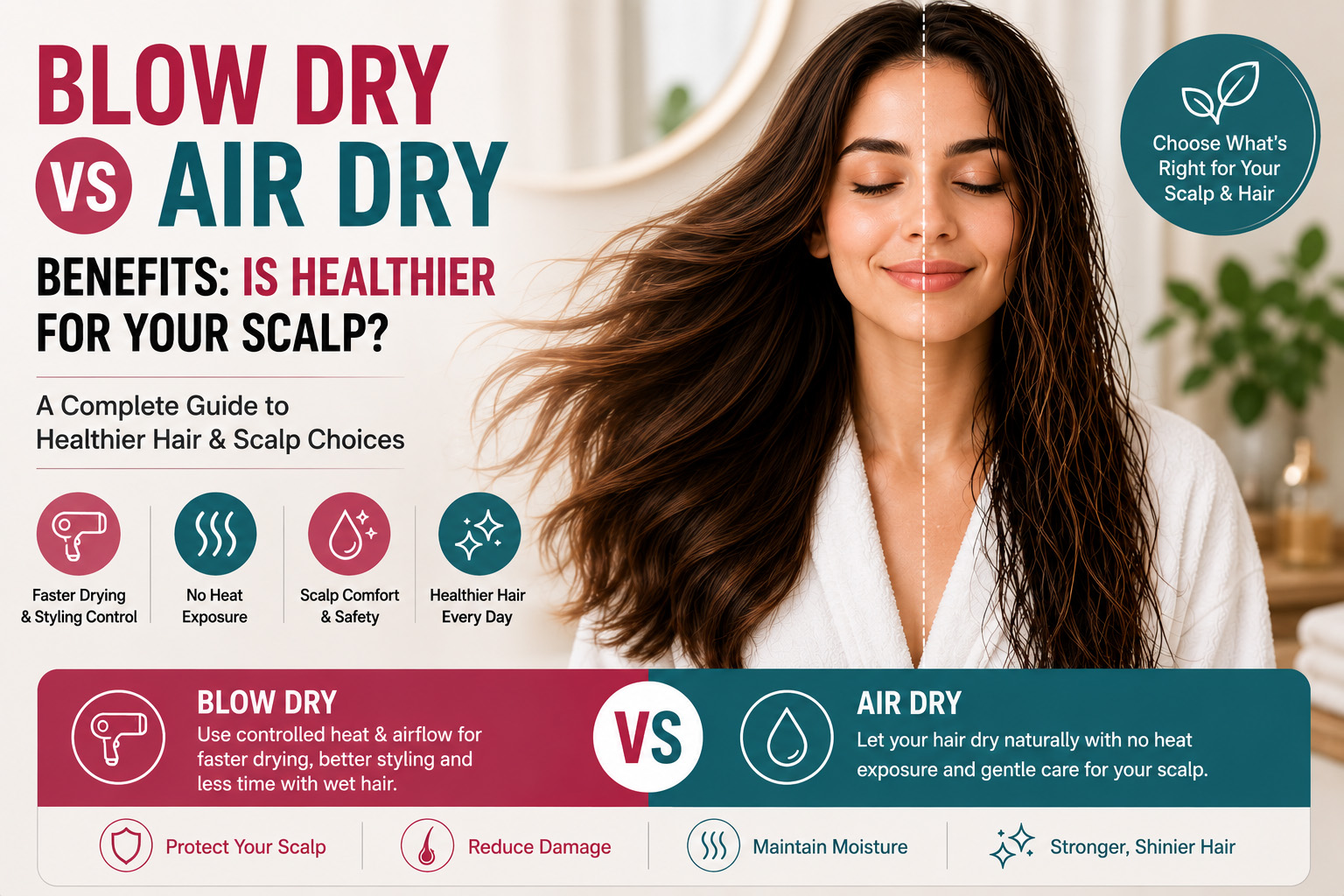
Is air drying better than blow drying?
Air drying eliminates direct hot-air exposure, but it doesn't mean that air drying is automatically better for every situation.
Hair is more fragile when wet, so handling wet hair gently is important.
How far away should a hair dryer be from your hair?
Avoid placing the nozzle directly against your hair.
A study found that drying from about 15 cm away with continuous movement produced less surface damage than closer, hotter drying conditions.
Final Thoughts
The biggest lesson from the 5 Mistakes People Make When Using A Hair Dryer Every Day is simple:
You don't necessarily need to stop using your hair dryer. You need to use it more intelligently.
Avoid excessive heat.
Don't hold the dryer too close.
Keep the airflow moving.
Remove excess moisture before intense styling.
And choose settings and attachments based on your hair type.
A daily hair-drying routine should balance drying speed, styling performance, comfort, and hair protection.
With the right technique, your hair dryer can remain a useful everyday styling tool without turning every morning into a high-heat session.

📬 Contact Information
Contact Person: Jenny
Tel / WhatsApp / WeChat: +86 137 1719 2238
Address: No. 12, Donghuan 2nd Road, Huangjiang Town, Dongguan, Guangdong, China
For partnership inquiries, distribution, private label OEM, or large-scale projects, please reach out directly.
Welcome to Hongya!
17+ years OEM/ODMproduction experience.
Main products include: HairDryers, Hot Air Brush, HairStraighteners, Hair Curlers,Hair Straightener Brushes,etc.
20+R&D staff
280+ employees.
15000+ ㎡ factories.
100,000+ PCS MonthlyProduction.
Currently developing200+ products.
Patents/Certifications support Online Query.

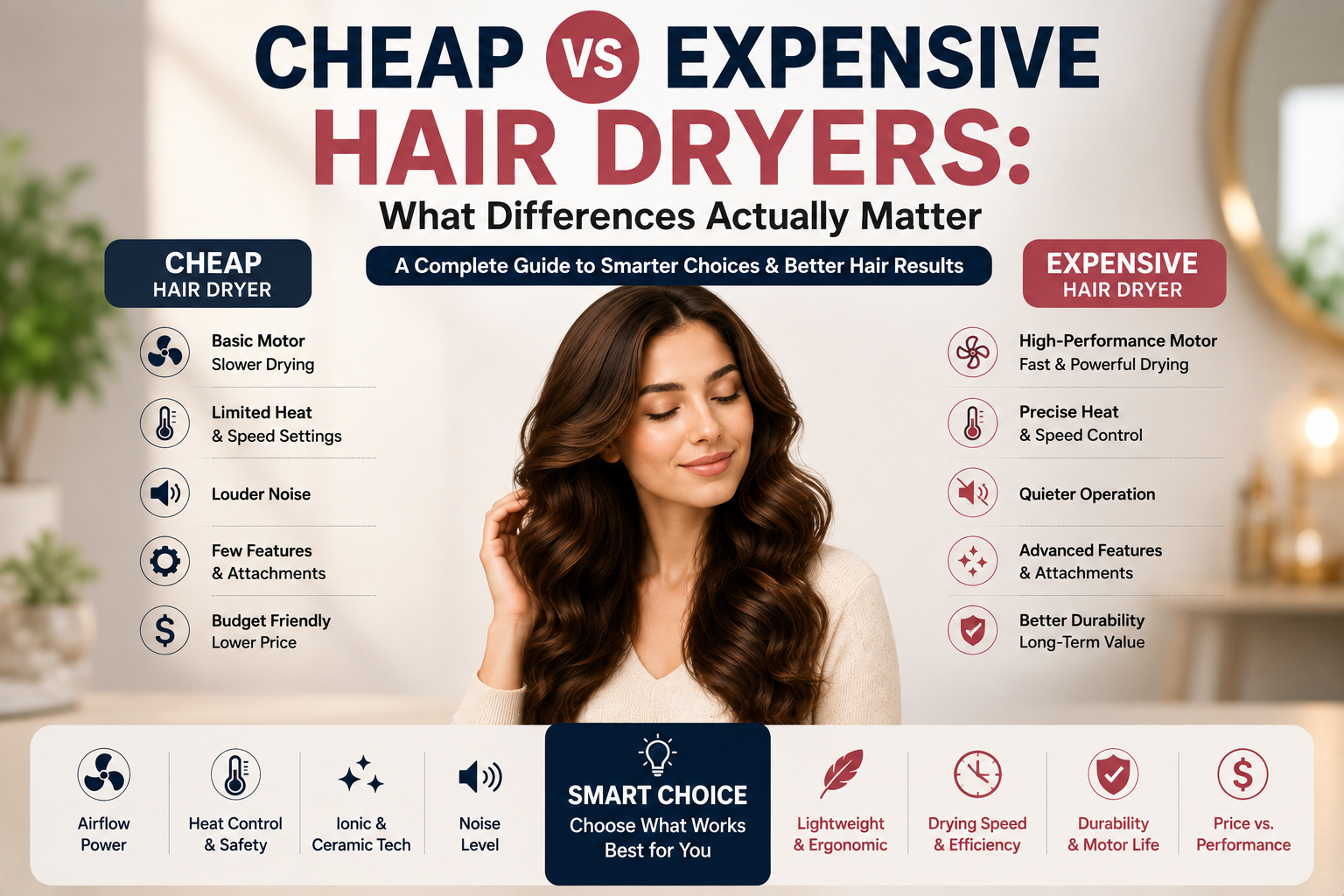
Cheap Vs Expensive Hair Dryers: What Differences Actually Matter?
Related Article