What Is a Dual Airflow Hair Dryer and It Improve Drying?
What Is a Dual Airflow Hair Dryer and It Improve Drying?
Choosing the right hair dryer can make a noticeable difference in your daily hair care routine. From drying speed to styling control, modern hair dryer technology continues to evolve to meet different hair care needs.
One innovation attracting attention is the dual airflow hair dryer. But what is a dual airflow hair dryer, and how does it improve drying compared with a traditional hair dryer?
A dual airflow hair dryer uses a specially designed airflow system to direct air through two airflow paths or channels, depending on the product's construction. This design aims to improve how air moves around the hair, potentially supporting more efficient drying and better styling control.
However, the actual benefits depend on the airflow structure, motor performance, nozzle design, heat settings, and how the device is used.
In this guide, we will explain how dual airflow hair dryer technology works, its potential advantages, how it compares with a regular hair dryer, and what to consider before buying one.

What Is a Dual Airflow Hair Dryer?
A dual airflow hair dryer is a hair styling appliance engineered with two airflow paths or channels to manage the movement and distribution of air during drying.
Unlike a conventional hair dryer that typically directs air through a primary outlet, a dual airflow hair dryer incorporates a specialized internal or outlet design intended to control airflow more precisely.
The exact configuration varies by manufacturer. Some designs may separate airflow into different channels, while others may combine airflow paths to influence how air reaches the hair.
How Is Dual Airflow Different from Regular Airflow?
A traditional hair dryer generally uses a motor and fan to move air through a heating system and out of a nozzle. Its drying performance depends on factors such as airflow volume, air velocity, temperature, and nozzle shape.
A dual airflow hair dryer introduces an additional airflow design element. When engineered effectively, this structure may help distribute air more strategically across the hair.
The key difference is not simply the number of airflow channels. It is how effectively the design directs air toward wet hair and supports consistent drying.
What Does Dual Airflow Technology Mean?
Dual airflow technology refers to an airflow management approach that uses two designated air paths or channels to influence air movement.
Depending on the product, the design may aim to:
-
Improve airflow distribution around sections of hair.
-
Support more controlled air direction during styling.
-
Help users dry and style hair with greater precision.
-
Work alongside a high-speed motor to improve overall drying performance.
These potential benefits depend on the specific engineering of the hair dryer. A dual-channel design does not automatically guarantee faster drying or less hair damage.
How Does a Dual Airflow Hair Dryer Work?
Understanding how a dual airflow hair dryer works helps explain why airflow design matters when choosing a modern styling appliance.
1. Air Intake and Motor Operation
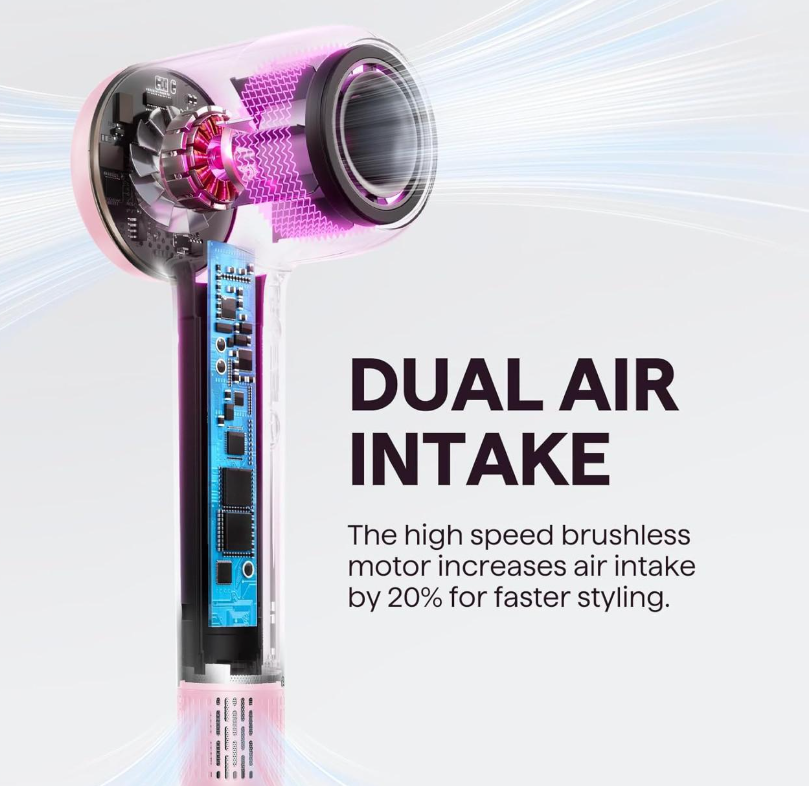
The drying process begins when the motor draws air into the appliance. The motor then drives airflow through the internal system.
Motor speed, fan design, and internal resistance all influence how efficiently air moves through the dryer.
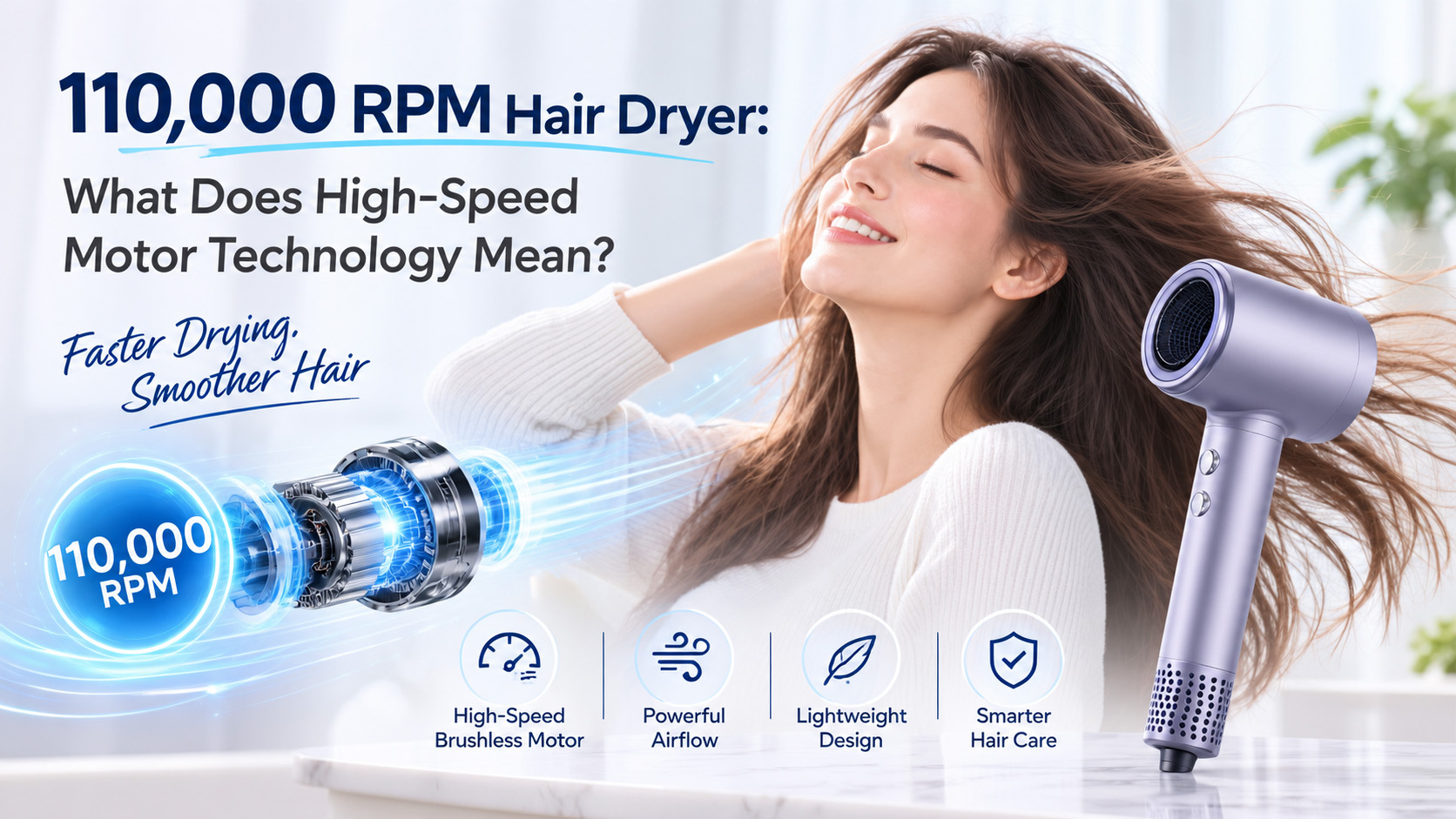
A high-speed motor may help generate strong airflow, but motor RPM alone does not determine drying performance. Air volume, air velocity, temperature, and overall system efficiency also matter.
2. Airflow Separation and Direction
Inside a dual airflow hair dryer, the air is guided through two designated paths or channels according to the device's design.
These channels may be arranged to direct air toward different areas or to shape the airflow as it exits the appliance.
The purpose is to manage air movement rather than simply increase heat.
A well-designed airflow system can help users direct air toward the hair more effectively, although the results depend on the particular design and styling technique.
3. Heat Transfer and Moisture Removal
When air passes over wet hair, heat transfer and air movement help water evaporate from the hair surface.
Air temperature affects evaporation, while airflow helps carry moisture away from the hair.
A dual airflow hair dryer may support efficient moisture removal when its airflow reaches the hair effectively. However, the actual drying time also depends on hair thickness, hair length, initial wetness, and the selected heat and speed settings.
4. Controlled Drying and Styling
After airflow exits the dryer, users move the appliance around different sections of hair.
A well-directed airflow pattern can help users focus on specific sections, smooth the hair during brushing, or create volume at the roots.
The final result depends on the airflow design, the attachment being used, and the user's styling technique.
How Does a Dual Airflow Hair Dryer Improve Drying?
The main goal of dual airflow technology is to improve the way air is delivered to the hair. Here are the potential advantages to consider.
1. More Efficient Air Distribution
Airflow distribution is an important factor in hair drying.
If a hair dryer directs air effectively across a section of hair, it may help remove moisture more evenly and reduce the need to repeatedly target the same area.
A dual airflow hair dryer designed for effective air distribution may therefore offer a more controlled drying experience.
However, two airflow channels alone do not prove that a device dries hair faster. Performance should be evaluated through real-world drying tests.
2. Potentially Faster Drying
Many consumers look for a high-speed hair dryer that can reduce time spent on their daily routine.
Drying speed depends on several factors, including airflow volume, air velocity, heat output, and how effectively air removes moisture from the hair.
A dual airflow system may contribute to efficient drying when it works together with a suitable motor and well-designed airflow outlets.
For the best results, compare measured drying performance rather than relying only on terms such as dual airflow, high speed, or powerful motor.
3. Better Control During Styling
Controlled airflow can be useful when creating different hairstyles.
For example, directing air toward the roots may help build volume, while directing air along the hair shaft with a brush may help create a smoother finish.
A dual airflow hair dryer may support these techniques if its outlet design provides useful control over the direction and distribution of air.
The results still depend on the attachment, brush technique, hair type, and styling settings.
4. A More Flexible Daily Hair Care Routine
Modern hair dryers often combine airflow engineering with adjustable temperature settings, multiple speed levels, and styling attachments.
When these features work together, users can adapt their drying routine to different needs, such as quick everyday drying, root lifting, or smoothing longer hair.
A dual airflow hair dryer with adjustable heat and speed settings may be a practical option for people who want flexibility in one styling appliance.
5. Potential Support for More Controlled Heat Exposure
Efficient drying is not just about producing hotter air. It is also about delivering air effectively and using an appropriate temperature.
If a hair dryer removes moisture efficiently, users may be able to avoid unnecessarily long exposure to heat. However, this benefit cannot be assumed from dual airflow technology alone.
Actual heat exposure depends on the device's temperature, drying time, distance from the hair, and how the user moves the dryer.
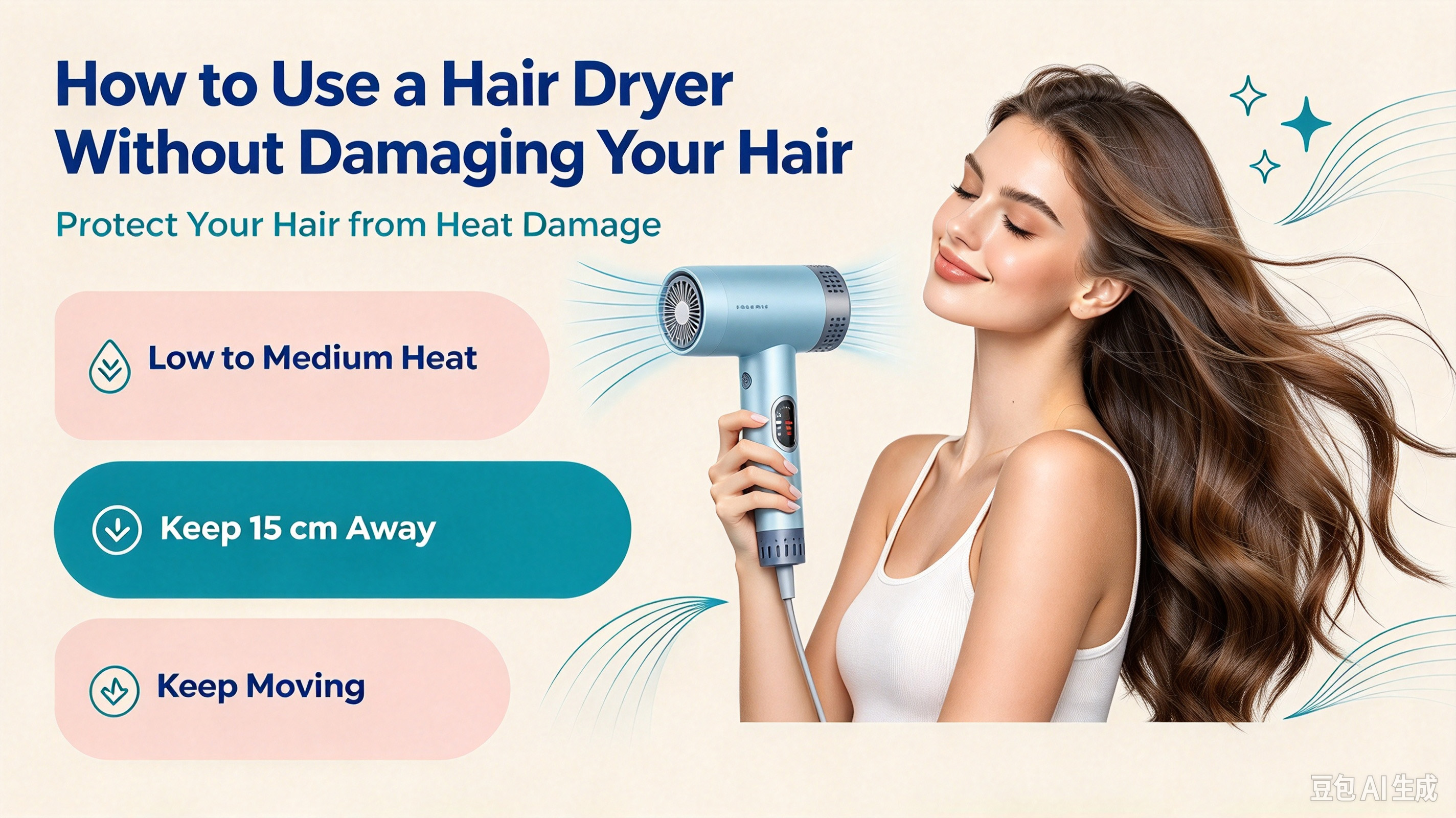
For healthier hair care, use a suitable heat setting, keep the dryer moving, and avoid concentrating hot air on one section for too long.
Dual Airflow Hair Dryer vs. Regular Hair Dryer
How does a dual airflow hair dryer compare with a conventional hair dryer?
The following table highlights the main differences to consider when shopping for a hair dryer.
| Feature | Dual Airflow Hair Dryer | Regular Hair Dryer |
|---|---|---|
| Airflow design | Uses two designated airflow paths or channels, depending on the model | Typically uses a primary airflow path |
| Air distribution | Designed to manage airflow through a specialized structure | Depends on the fan, outlet, and nozzle design |
| Drying speed | Depends on measured performance and system efficiency | Depends on measured performance and system efficiency |
| Styling control | May offer useful airflow direction or distribution | Varies by nozzle and attachment |
| Heat protection | Depends on temperature control and usage | Depends on temperature control and usage |
| Best buying approach | Evaluate airflow design alongside performance data | Evaluate airflow, heat, motor, and attachments |

Which Hair Dryer Is Better?
A dual airflow hair dryer may be worth considering if you want to explore a newer airflow design and value controlled air distribution.
A regular hair dryer can also perform extremely well when it has an efficient motor, suitable airflow, effective temperature control, and a well-designed nozzle.
The best choice is the hair dryer that matches your hair type, drying routine, and styling needs—not necessarily the one with the most advanced-sounding technology.
Is a Dual Airflow Hair Dryer Suitable for Different Hair Types?
Hair type affects how much moisture a dryer needs to remove and how much styling control a user may need.
Dual Airflow Hair Dryer for Fine or Thin Hair
Fine or thin hair can lose volume when exposed to excessive heat or weighed down by heavy styling products.
When choosing a dual airflow hair dryer for fine hair, look for adjustable heat settings and controllable airflow.
Use a moderate temperature and direct air toward the roots when creating volume. A suitable nozzle can help you control the direction of airflow.
Dual Airflow Hair Dryer for Thick Hair
Thick hair often takes longer to dry because a larger amount of hair needs to release moisture.
For thick hair, prioritize effective airflow, sufficient power, and comfortable handling.
A dual airflow design may be useful if it delivers air efficiently across sections of hair, but compare actual drying times before assuming it will outperform another model.
Dual Airflow Hair Dryer for Curly Hair
Curly hair can be prone to frizz when dried with excessive heat or disrupted by overly aggressive airflow.
If you have curly hair, consider a dryer with adjustable speed and temperature settings. A compatible diffuser can help distribute airflow around curls.
Dual airflow technology may be an additional feature to consider, but gentle settings and appropriate drying techniques are often more important than the airflow label itself.
Dual Airflow Hair Dryer for Everyday Use
For everyday styling, convenience matters as much as technical specifications.
Look for a lightweight body, comfortable grip, easy-to-use controls, and a suitable range of heat and speed settings.
A dual airflow hair dryer may be a good fit for regular use if its design makes drying and styling easier without adding unnecessary weight or complexity.
What Features Should You Look for in a Dual Airflow Hair Dryer?
Not all dual airflow hair dryers deliver the same experience. Before purchasing one, evaluate the entire product rather than focusing on a single feature.
1. Motor Performance
The motor influences airflow generation and contributes to overall drying performance.
Some high-speed hair dryers use brushless motors designed for rapid rotation and compact construction. However, RPM should not be treated as a direct measurement of drying speed.
Compare motor specifications alongside airflow volume, air velocity, power consumption, and practical drying results whenever those figures are available.
2. Adjustable Heat and Speed Settings
Different hair types benefit from different drying conditions.
Multiple heat and speed settings allow you to adjust the airflow and temperature to your needs.
Fine hair may benefit from lower heat, while thick hair may require stronger airflow or more time. The best setting is the one that dries your hair effectively without unnecessary heat exposure.
3. Air Outlet and Nozzle Design
The nozzle influences how air is directed toward the hair.
A well-designed outlet can help users concentrate airflow for smoothing or distribute it more broadly for general drying.
When evaluating a dual airflow hair dryer, examine how the channels and outlets work together rather than assuming that more channels always mean better performance.
4. Temperature Control
Temperature control is an important feature for people who dry their hair frequently.
Look for clearly defined heat settings and, where available, information about temperature regulation.
Avoid choosing a dryer based only on its maximum temperature. Effective airflow and appropriate heat management are more useful than excessive heat alone.
5. Weight and Ergonomics
A hair dryer should be comfortable to hold and maneuver.
A lightweight design can make a difference during longer styling sessions, especially for users with thick or long hair.
Consider the handle shape, weight distribution, cord length, and control placement before buying.
6. Attachments and Maintenance
Styling attachments can expand a hair dryer’s usefulness.
Depending on your needs, you may want a concentrator nozzle for smoothing or a compatible diffuser for curly hair.
Also check whether the filter is easy to clean. Removing accumulated dust and hair according to the manufacturer's instructions can help maintain airflow and support reliable operation.
How to Use a Dual Airflow Hair Dryer Effectively
Even a well-designed hair dryer needs the right technique to deliver good results.
Step 1: Remove Excess Water
After washing your hair, gently squeeze out excess water with a towel.
Avoid rubbing wet hair aggressively, as wet hair is more vulnerable to mechanical damage.
Step 2: Apply a Suitable Heat Protectant
If you use a heat protectant, choose one appropriate for your hair type and follow its product instructions.
Apply it evenly before using the dryer.
Step 3: Choose the Right Heat and Speed
Start with a moderate heat setting and adjust the airflow to suit your hair.
Use lower heat for delicate or fine hair, and increase the settings only when necessary.
Step 4: Dry in Manageable Sections
Divide thick or long hair into smaller sections.
Move the dryer steadily so that airflow reaches different areas instead of concentrating on one spot.
This approach can help make drying more consistent and easier to control.
Step 5: Adjust Airflow for Your Styling Goal
For smoother hair, direct the airflow along the hair shaft while brushing gently.
For additional root volume, lift small sections and direct air toward the roots without holding the dryer too close.
For curly hair, use a compatible diffuser and a suitable lower-speed setting when appropriate.
Step 6: Clean the Filter Regularly
Dust and hair can accumulate around the air intake and restrict airflow.
Follow the manufacturer's instructions for inspecting and cleaning the filter. Always disconnect the appliance from power before performing maintenance.
Common Misconceptions About Dual Airflow Hair Dryer Technology
As dual airflow hair dryers become more familiar to consumers, it is important to separate practical benefits from marketing claims.
Myth 1: Dual Airflow Always Means Faster Drying
Not necessarily.
Drying speed depends on airflow performance, heat transfer, hair characteristics, and the complete design of the appliance.
A well-engineered regular hair dryer may outperform a poorly designed dual airflow model.
Myth 2: Dual Airflow Automatically Prevents Heat Damage
No hair dryer design can guarantee that hair will never experience heat damage.
Temperature, exposure time, drying distance, and usage habits all influence the amount of heat stress hair experiences.
Choose suitable settings and use a consistent, gentle drying technique.
Myth 3: A Higher Motor RPM Always Means Better Performance
Motor speed is only one specification.
A high RPM figure does not automatically translate into greater airflow volume, better moisture removal, or a shorter drying time.
Evaluate the motor alongside the airflow system and verified performance data.
Myth 4: Every Dual Airflow Hair Dryer Uses the Same Design
The term can describe different engineering approaches.
Air channels, outlet geometry, internal airflow paths, and nozzle configurations can vary between manufacturers.
Always review the specific product's design and specifications before deciding whether its features meet your needs.
Frequently Asked Questions About Dual Airflow Hair Dryers
What is a dual airflow hair dryer?
A dual airflow hair dryer is a hair dryer designed with two airflow paths or channels to influence how air moves through or exits the appliance. Its intended benefits may include more controlled airflow distribution and improved drying or styling performance, depending on the design.
How does a dual airflow hair dryer improve drying?
A dual airflow hair dryer aims to improve the delivery and distribution of air around the hair. When combined with an effective motor, suitable heat output, and a well-designed nozzle, this may support efficient moisture removal. Actual results vary by product and hair type.
Is a dual airflow hair dryer better than a regular hair dryer?
Not automatically. Dual airflow technology offers a different approach to airflow management, but a conventional hair dryer can also deliver excellent results. Compare real-world drying performance, temperature control, ergonomics, and attachments before making a decision.
Does a dual airflow hair dryer dry hair faster?
It may, if its airflow system improves effective air delivery. However, the number of airflow channels alone does not establish drying speed. Hair thickness, length, moisture level, airflow volume, and temperature also affect the result.
Is a dual airflow hair dryer suitable for fine hair?
It can be suitable for fine hair if it provides adjustable heat and speed settings. Use moderate heat, avoid prolonged exposure to one section, and direct airflow carefully when creating volume.
Can a dual airflow hair dryer help reduce frizz?
A well-controlled drying technique may help users achieve a smoother finish. However, frizz is influenced by hair condition, humidity, heat exposure, brushing technique, and product choice. Dual airflow technology alone does not guarantee frizz reduction.
What should I look for when buying a dual airflow hair dryer?
Consider motor performance, airflow design, adjustable heat and speed settings, nozzle attachments, weight, noise level, filter maintenance, and verified drying performance. Choose features that suit your hair type and everyday routine.
Is a high-speed dual airflow hair dryer worth buying?
It may be worth considering if the appliance combines effective airflow, suitable temperature control, comfortable handling, and useful styling features. Compare its verified performance and price with conventional hair dryers before deciding.
Conclusion: Is a Dual Airflow Hair Dryer Worth Considering?
So, what is a dual airflow hair dryer, and how does it improve drying?
It is a hair dryer that uses a specialized dual-path airflow design to influence how air is delivered to the hair. Depending on its engineering, this approach may support more controlled air distribution, efficient moisture removal, and flexible styling.
However, dual airflow technology is only one part of overall hair dryer performance. Motor efficiency, airflow volume, nozzle design, heat control, and user technique remain important factors.
If you are choosing a new hair dryer, compare the complete specifications and practical performance rather than relying on a single technology label.
A well-designed dual airflow hair dryer may be a useful option for everyday drying and styling, provided its features match your hair type and your personal hair care needs.
📬 Contact Information
Contact Person: Jenny
Tel / WhatsApp / WeChat: +86 137 1719 2238
Address: No. 12, Donghuan 2nd Road, Huangjiang Town, Dongguan, Guangdong, China
For partnership inquiries, distribution, private label OEM, or large-scale projects, please reach out directly.
Welcome to Hongya!
17+ years OEM/ODMproduction experience.
Main products include: HairDryers, Hot Air Brush, HairStraighteners, Hair Curlers,Hair Straightener Brushes,etc.
20+R&D staff
280+ employees.
15000+ ㎡ factories.
100,000+ PCS MonthlyProduction.
Currently developing200+ products.
Patents/Certifications support Online Query.

Hair Straightener vs Straightening Brush: Which One Is Better for You?
Related Article
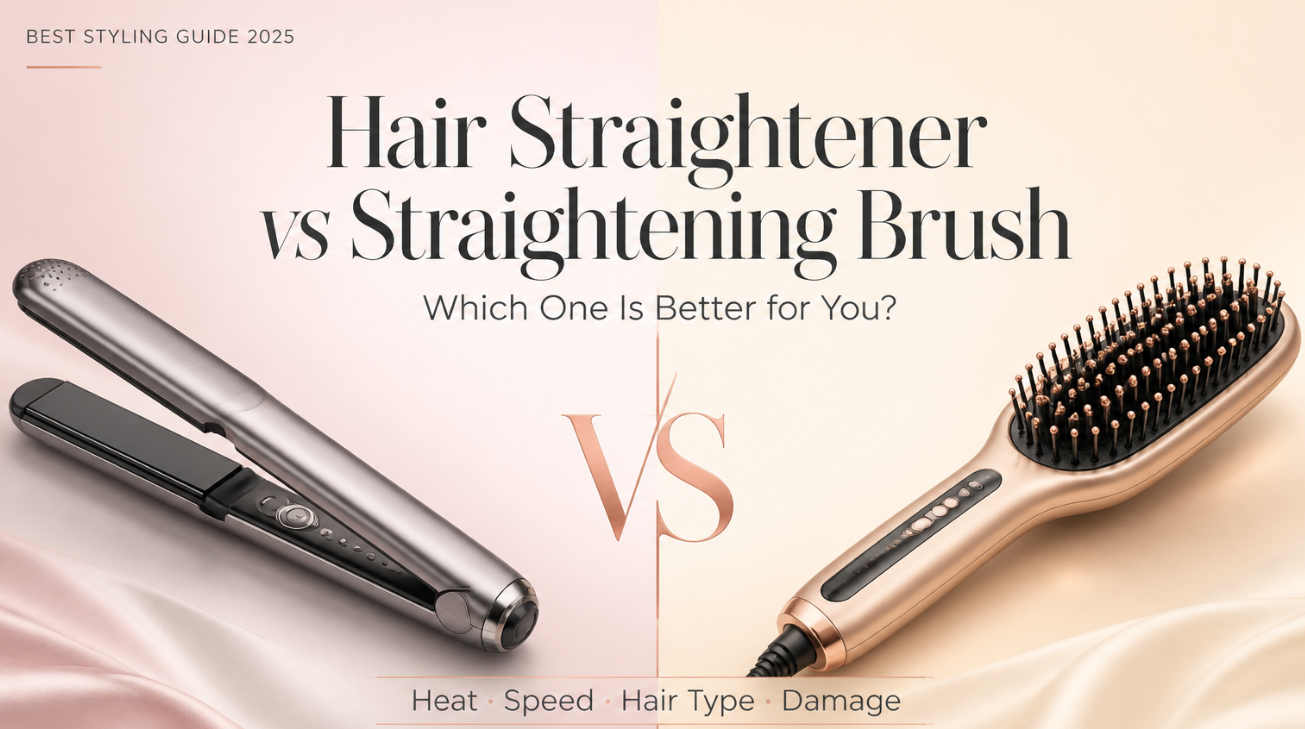
This guide breaks down the real differences so you can pick the right tool with confidence.