Blow Dry Vs Air Dryer Benefits:Is Healthier For Your Scalp?
Blow Dry Vs Air Dryer Benefits:Is Healthier For Your Scalp?
Choosing between blow-drying and air-drying is a common hair-care question. Many people wonder whether letting hair dry naturally is healthier for the scalp, or whether using a hair dryer can actually be a better option when used correctly.
The answer is not simply “air drying is healthier” or “blow drying is better.” Both methods have advantages and disadvantages. The real difference comes down to heat level, drying time, distance, airflow, hair condition, and how the scalp is treated during the drying process.
This guide to Blow Dry Vs Air Dryer Benefits:Is Healthier For Your Scalp explains the differences between blow drying and air drying, their potential effects on the scalp and hair, and how to choose a healthier drying method for everyday use.

Blow Dry Vs Air Dryer Benefits:Is Healthier For Your Scalp?
Before comparing the two methods, it is important to understand what happens when wet hair is left to dry naturally versus dried with moving warm air.
Air drying allows water to evaporate gradually without direct heat.
Blow drying uses airflow, usually combined with heated air, to accelerate moisture evaporation.
Neither method is automatically harmful when used appropriately.
The main concern is how much heat and moisture exposure the scalp and hair receive, rather than simply whether a hair dryer is used.
What Is Air Drying?
Air drying means allowing your hair to dry naturally after washing.
It does not require a hair dryer, heating element, or artificial airflow.
Benefits of Air Drying Hair
Air drying has one obvious advantage: it eliminates direct heat exposure from a hair dryer.
This can be useful for people who frequently use high temperatures or hold a dryer too close to the hair.
No Direct Heat Exposure
Because there is no heated airflow, air drying avoids the thermal exposure associated with blow drying.
This can be particularly appealing for people with dry, fragile, or chemically treated hair.
Simple and Convenient
Air drying requires almost no equipment.
After washing your hair, you can gently remove excess water with a towel and allow it to dry naturally.
Lower Energy Use
Air drying also consumes no electricity, making it the simplest option from an energy-use perspective.
What Are the Disadvantages of Air Drying?
Air drying is not automatically perfect for your scalp or hair.
The biggest issue is that wet hair remains wet for a longer period of time.
Wet Hair Is More Vulnerable
Hair becomes more vulnerable to mechanical damage when wet.
Wet strands can stretch more easily and are more susceptible to friction and breakage.
This means that repeatedly brushing, combing, twisting, or tying wet hair can create unnecessary stress.
Prolonged Dampness
If the scalp and hair remain damp for a long time, especially in a warm or humid environment, the experience may also become uncomfortable.
People with an oily scalp may dislike the feeling of leaving their roots wet for an extended period.
Therefore, the idea that air drying is always the healthiest option is too simplistic.
What Is Blow Drying?
Blow drying uses a hair dryer to move air across wet hair.
Most modern hair dryers combine airflow with different temperature settings.
The objective is to accelerate water evaporation.
Benefits of Blow Drying
When used correctly, blow drying can be an efficient way to remove moisture from the hair.
Faster Drying
The biggest advantage of a hair dryer is speed.
Strong airflow can significantly reduce the amount of time hair remains wet.
This can be particularly useful for:
- Thick hair
- Long hair
- Dense hair
- People with busy morning routines
- Cold weather
- Humid environments
Better Styling Control
A hair dryer can also provide more control over the final hairstyle.
Different attachments can direct airflow for:
- Smoothing
- Straightening
- Volume
- Curl definition
- Root lifting
Adjustable Temperature
A modern hair dryer usually allows users to choose different heat levels.
This means you do not necessarily have to use maximum heat.
A lower or medium temperature combined with sufficient airflow can often provide a more controlled drying experience.
Is Blow Drying Bad for Your Scalp?
This is one of the most important questions in Blow Dry Vs Air Dryer Benefits:Is Healthier For Your Scalp.
Blow drying itself is not necessarily bad for the scalp.
The main concern is excessive heat exposure.
Holding a hot hair dryer close to the scalp for a long time can make the scalp uncomfortable and may cause excessive heat exposure.
How to Blow Dry Without Overheating the Scalp
Keep the dryer moving rather than concentrating hot air on one small area.
Avoid holding the nozzle directly against the scalp.
Use a moderate temperature whenever practical.
If the scalp begins to feel excessively hot or uncomfortable, reduce the temperature or increase the distance.
The Key Principle
The goal is efficient drying, not maximum heat.
Strong airflow and appropriate temperature are generally more useful than simply choosing the hottest setting.
Blow Dry Vs Air Dry: Which Is Healthier?
There is no universal answer.
The healthier method depends on how each method is performed.
| Factor | Blow Drying | Air Drying |
|---|---|---|
| Direct heat | Possible | None |
| Drying speed | Fast | Slow |
| Styling control | High | Low |
| Wet-hair exposure | Shorter | Longer |
| Energy use | Uses electricity | No electricity |
| Heat-related risk | Higher with excessive heat | Minimal |
| Convenience | High | Very simple |
| Best for | Fast drying and styling | Gentle no-heat drying |
For someone who uses very high heat incorrectly, air drying may be the better choice.
For someone who leaves hair wet for a long time but uses a hair dryer carefully at a moderate temperature, controlled blow drying can be a practical alternative.
Blow Dry Vs Air Dryer Benefits:Is Healthier For Your Scalp?
When comparing Blow Dry Vs Air Dryer Benefits:Is Healthier For Your Scalp, it is useful to separate scalp health from hair-fiber health.
The scalp is living skin.
Hair itself is a non-living fiber.
The factors that affect each are therefore somewhat different.
For Scalp Comfort
Avoid excessive heat directly against the scalp.
A cool or moderate airflow setting can be more comfortable for regular use.
For Hair Condition
Limit excessive temperature and prolonged heat exposure.
Keep the dryer moving and avoid repeatedly heating the same section.
For Wet-Hair Protection
Minimize unnecessary brushing and aggressive handling while the hair is soaking wet.
This is one reason controlled blow drying may be useful for people who want to reduce the amount of time their hair remains saturated with water.
Does Air Drying Prevent Hair Damage?
Air drying eliminates heat from the drying process, but that does not mean it eliminates every type of damage.
Hair can experience mechanical stress when wet.
Common Air-Drying Mistakes
Avoid:
- Aggressive towel rubbing
- Brushing soaking-wet hair unnecessarily
- Tight ponytails while hair is wet
- Sleeping with very wet hair
- Constantly touching wet hair
- Pulling or twisting wet strands
A Better Air-Drying Routine
After washing:
- Gently squeeze out excess water.
- Use a soft towel to remove moisture.
- Detangle carefully when appropriate.
- Let the hair dry naturally.
- Avoid unnecessary friction.
Does Blow Drying Damage Hair?
Excessive heat can contribute to hair damage.
The risk depends on several factors.
Temperature
Higher temperatures increase thermal exposure.
Distance
A dryer held extremely close to the hair concentrates heat on a smaller area.
Drying Time
The longer one area receives high heat, the greater the exposure.
Hair Condition
Bleached, chemically treated, dry, or fragile hair may require more careful heat management.
Therefore, how you blow dry matters more than simply whether you blow dry.
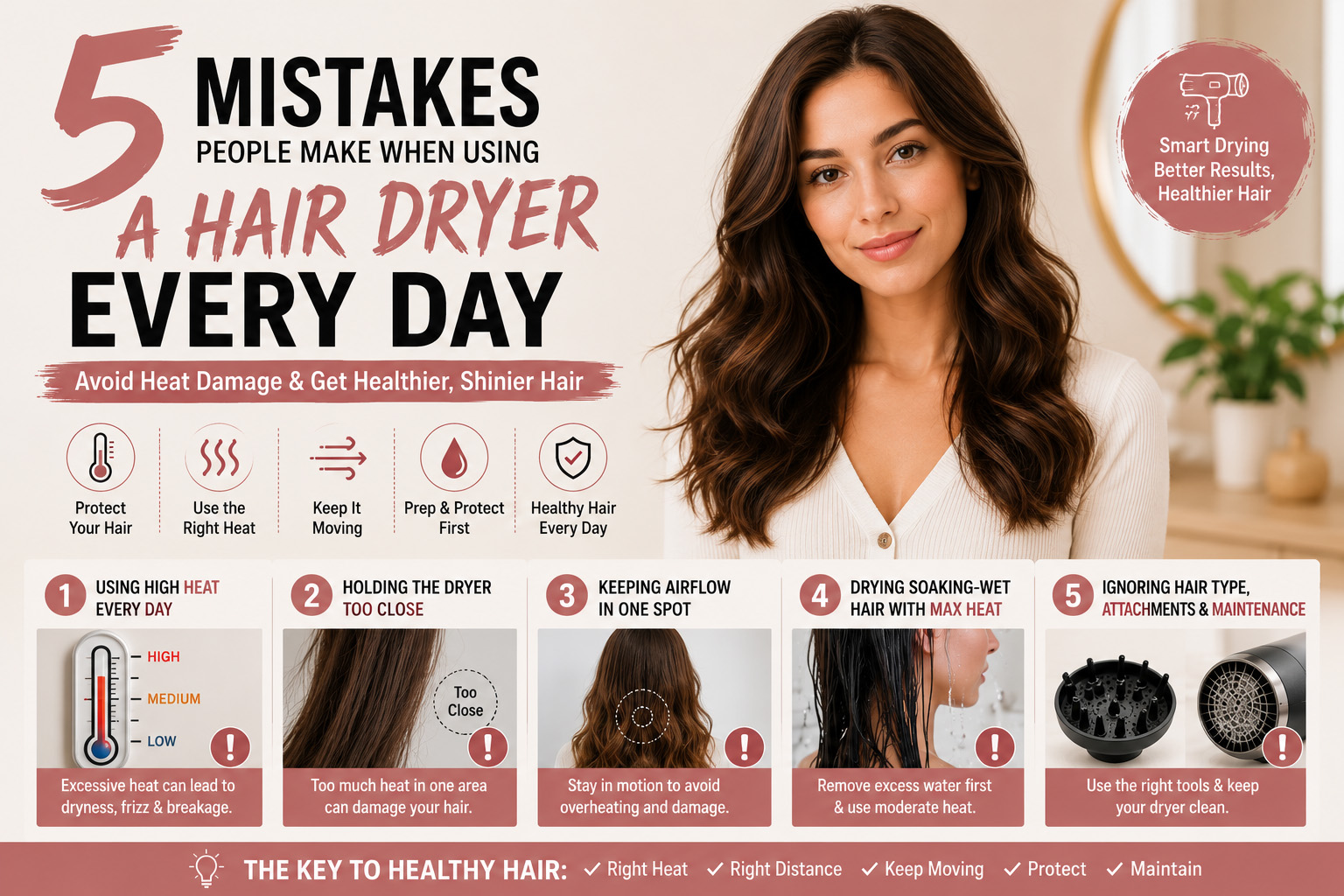
How to Blow Dry Hair More Safely
If you prefer blow drying, you do not necessarily need to give up your hair dryer.
Instead, improve your technique.
1. Remove Excess Water First
Do not start with hair that is dripping wet.
Gently remove excess water with a towel.
Avoid vigorous rubbing.
2. Start With Moderate Heat
Begin with a lower or medium temperature.
Increase heat only when necessary.
Why Moderate Heat Matters
The purpose of a hair dryer is to remove moisture efficiently.
There is little reason to expose the scalp and hair to unnecessarily high temperatures when moderate heat and adequate airflow can do the job.
3. Keep the Dryer Moving
Continuous movement helps prevent one section from receiving concentrated heat.
Move the dryer across different areas instead of keeping it stationary.
4. Maintain Distance
Do not press the nozzle directly against the hair or scalp.
Maintain a reasonable distance based on the manufacturer's recommendations.
5. Use a Cool-Air Finish
A cool-air setting can be useful at the end of styling.
It can help bring the drying process to a close without continuing to expose the hair to high temperatures.
Blow Drying Tips for Different Hair Types
Different hair types require different drying strategies.
Fine Hair
Fine hair generally does not require extremely high temperatures.
Use moderate airflow and lower heat when practical.
Avoid repeatedly heating the same section.
Thick Hair
Thick hair can take longer to dry naturally.
A powerful airflow setting can help remove moisture efficiently.
Instead of relying entirely on high heat, prioritize airflow.
Curly Hair
Curly hair can benefit from controlled airflow.
A diffuser attachment can help distribute airflow more evenly and reduce excessive disturbance of the curl pattern.
Recommended Approach
Use moderate heat and moderate airflow.
Move the diffuser gently rather than aggressively brushing through the curls.
Damaged or Chemically Treated Hair
Hair that has already experienced bleaching, coloring, perming, or other chemical processing may require additional care.
Use lower heat whenever practical.
Reduce unnecessary drying time.
Avoid repeated high-temperature exposure.
Is a Hair Dryer Better for Your Scalp Than Air Drying?
This question needs a nuanced answer.
A hair dryer can reduce the time that the scalp remains wet.
However, using excessive heat can create another problem.
Therefore, neither method should be considered universally superior.
When Air Drying May Be Better
Air drying may be preferable when:
- You have plenty of time.
- You want to avoid heat completely.
- Your hair is not excessively thick.
- You can avoid mechanical stress while hair is wet.
- Your environment allows hair to dry comfortably.
When Blow Drying May Be Better
Blow drying may be preferable when:
- You need your hair dry quickly.
- You have thick or long hair.
- You live in a cold environment.
- You need to style your hair.
- You can control the temperature and airflow.
- You want to reduce prolonged wetness.
How to Choose the Right Hair Dryer for Scalp-Friendly Drying
If you regularly blow dry your hair, the design of the hair dryer matters.
Adjustable Temperature Settings
Look for multiple heat settings.
This allows you to avoid using maximum temperature for every drying session.
Strong Airflow
Strong airflow can help reduce drying time without requiring extreme heat.
Temperature Control
Consistent temperature control can make the drying process more predictable.
Lightweight Ergonomic Design
A lightweight hair dryer can be easier to maneuver.
This is especially helpful when drying thick or long hair.
Cool-Air Setting
A dedicated cool-air option gives users another way to finish styling without continuing to apply high heat.
Common Mistakes When Blow Drying
Even a high-quality hair dryer can be used incorrectly.
Using Maximum Heat Every Time
Maximum heat is not always necessary.
Use the lowest practical temperature that provides efficient drying.
Holding the Dryer Too Close
A very short distance concentrates heat.
Keep the dryer at a reasonable distance.
Staying in One Position
Holding the dryer in one place can increase localized heat exposure.
Keep it moving.
Drying Hair From Soaking Wet to Completely Dry With High Heat
Remove excess water first.
Then use controlled airflow and temperature to finish drying.
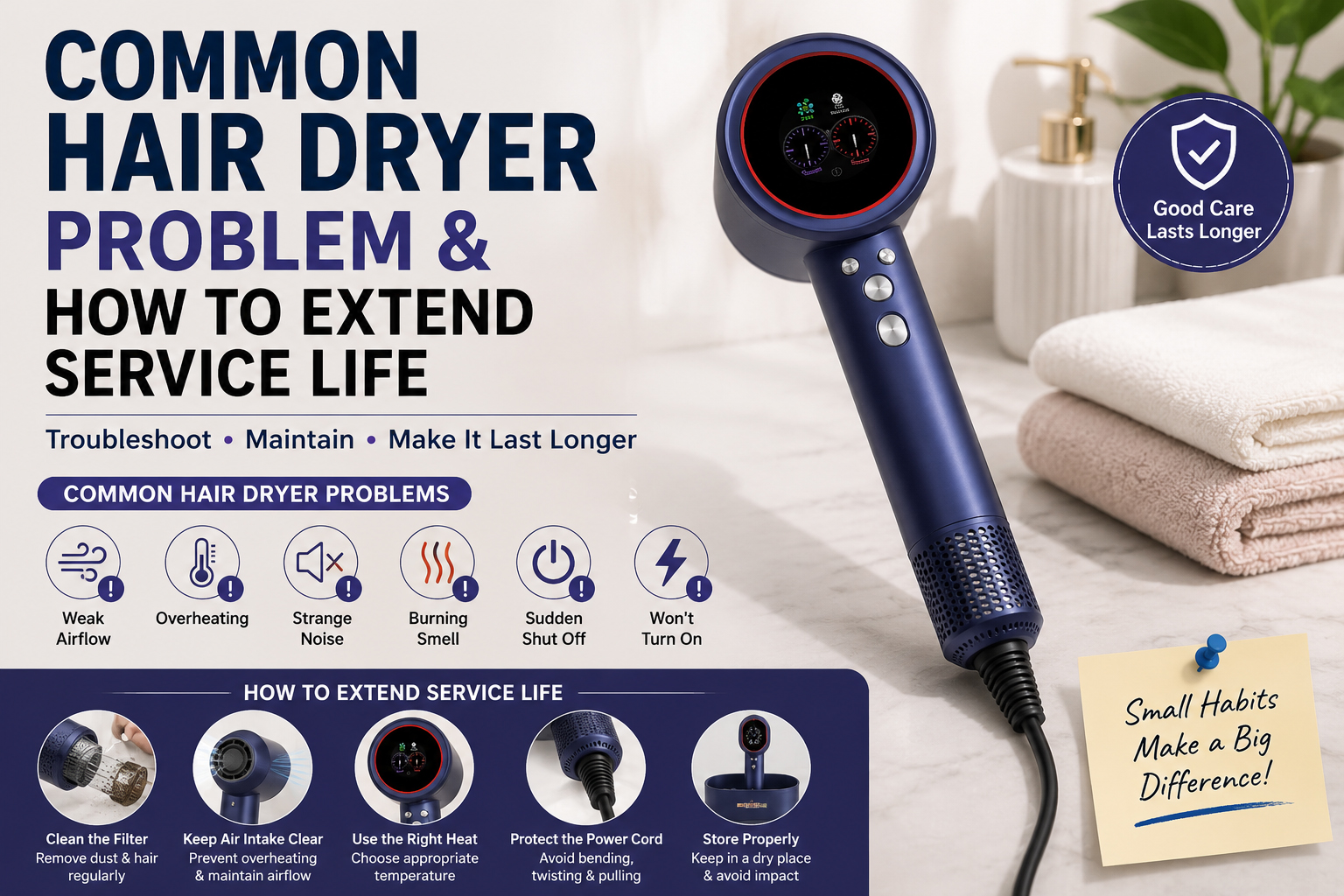
Ignoring the Filter
A clogged filter can restrict airflow and affect performance.
Clean the filter according to the manufacturer's instructions.
How to Protect Your Scalp During Hair Drying
Scalp-friendly drying is mostly about temperature management and good technique.
Avoid Excessive Heat
If the scalp feels too hot, reduce the temperature.
Do Not Concentrate Heat on One Area
Move the dryer continuously.
Avoid Drying at Maximum Temperature for Too Long
High heat should not be the default setting.
Pay Attention to Scalp Sensitivity
If your scalp is unusually sensitive, irritated, or uncomfortable, avoid aggressive heat and consider discussing persistent symptoms with a qualified healthcare professional.
Blow Dry Vs Air Dryer Benefits:Is Healthier For Your Scalp? Final Verdict
So, Blow Dry Vs Air Dryer Benefits:Is Healthier For Your Scalp?
The answer is that both methods can be appropriate when used correctly.
Air drying has the clear advantage of avoiding direct heat.
However, it also leaves hair wet for a longer period, and wet hair can be more vulnerable to mechanical stress.
Blow drying can dramatically shorten drying time and provide styling control, but excessive heat, close-distance drying, and prolonged exposure can increase thermal stress.
The best approach is therefore not necessarily to choose one method exclusively.
Instead:
Remove excess water first, use moderate heat, maintain good airflow, keep the dryer moving, and avoid concentrating heat directly on the scalp.
For people who frequently use a hair dryer, a model with adjustable temperature, strong airflow, cool-air settings, ergonomic handling, and reliable temperature control can make controlled drying easier.
Ultimately, the healthiest drying routine is the one that minimizes unnecessary heat and mechanical stress while efficiently removing excess moisture.

FAQ: Blow Dry Vs Air Dryer Benefits:Is Healthier For Your Scalp
Is blow drying or air drying healthier for the scalp?
Neither method is universally healthier.
Air drying eliminates direct heat, while controlled blow drying can shorten the time hair and scalp remain wet.
The best choice depends on temperature, drying technique, hair type, and individual preference.
Is air drying better for damaged hair?
Air drying avoids heat exposure, which can be useful for fragile hair.
However, avoid aggressive brushing, rubbing, or tying while hair is very wet because wet hair can be more vulnerable to mechanical stress.
Does blow drying cause scalp damage?
Excessive heat can make the scalp uncomfortable and may contribute to thermal stress.
Use moderate temperatures, maintain distance, and keep the dryer moving.
Can I blow dry my hair every day?
Yes, if you use the dryer appropriately.
For daily use, avoid unnecessarily high temperatures and prolonged exposure.
A moderate heat setting combined with effective airflow can be a practical approach.
Is it bad to sleep with wet hair?
Sleeping with wet hair can increase friction and mechanical stress because hair remains wet for an extended period.
If possible, allow the hair to become mostly dry before going to bed.
What is the best temperature for blow drying hair?
There is no single temperature that is ideal for everyone.
Use the lowest practical temperature that dries your hair efficiently.
Fine or fragile hair generally benefits from more conservative heat settings.
Is a cool setting better for the scalp?
Cool or low-temperature airflow reduces heat exposure and can be more comfortable for sensitive scalps.
However, drying efficiency also depends on airflow strength and hair thickness.
Does blow drying make hair healthier?
A hair dryer does not inherently make hair healthier.
Its main advantage is controlled and efficient drying.
The benefit comes from using appropriate airflow and temperature while minimizing excessive heat exposure.
How can I protect my scalp when blow drying?
Use moderate heat, maintain a reasonable distance, keep the dryer moving, and avoid concentrating hot airflow on one area for an extended period.
📬 Contact Information
Contact Person: Jenny
Tel / WhatsApp / WeChat: +86 137 1719 2238
Address: No. 12, Donghuan 2nd Road, Huangjiang Town, Dongguan, Guangdong, China
For partnership inquiries, distribution, private label OEM, or large-scale projects, please reach out directly.
Welcome to Hongya!
17+ years OEM/ODMproduction experience.
Main products include: HairDryers, Hot Air Brush, HairStraighteners, Hair Curlers,Hair Straightener Brushes,etc.
20+R&D staff
280+ employees.
15000+ ㎡ factories.
100,000+ PCS MonthlyProduction.
Currently developing200+ products.
Patents/Certifications support Online Query.

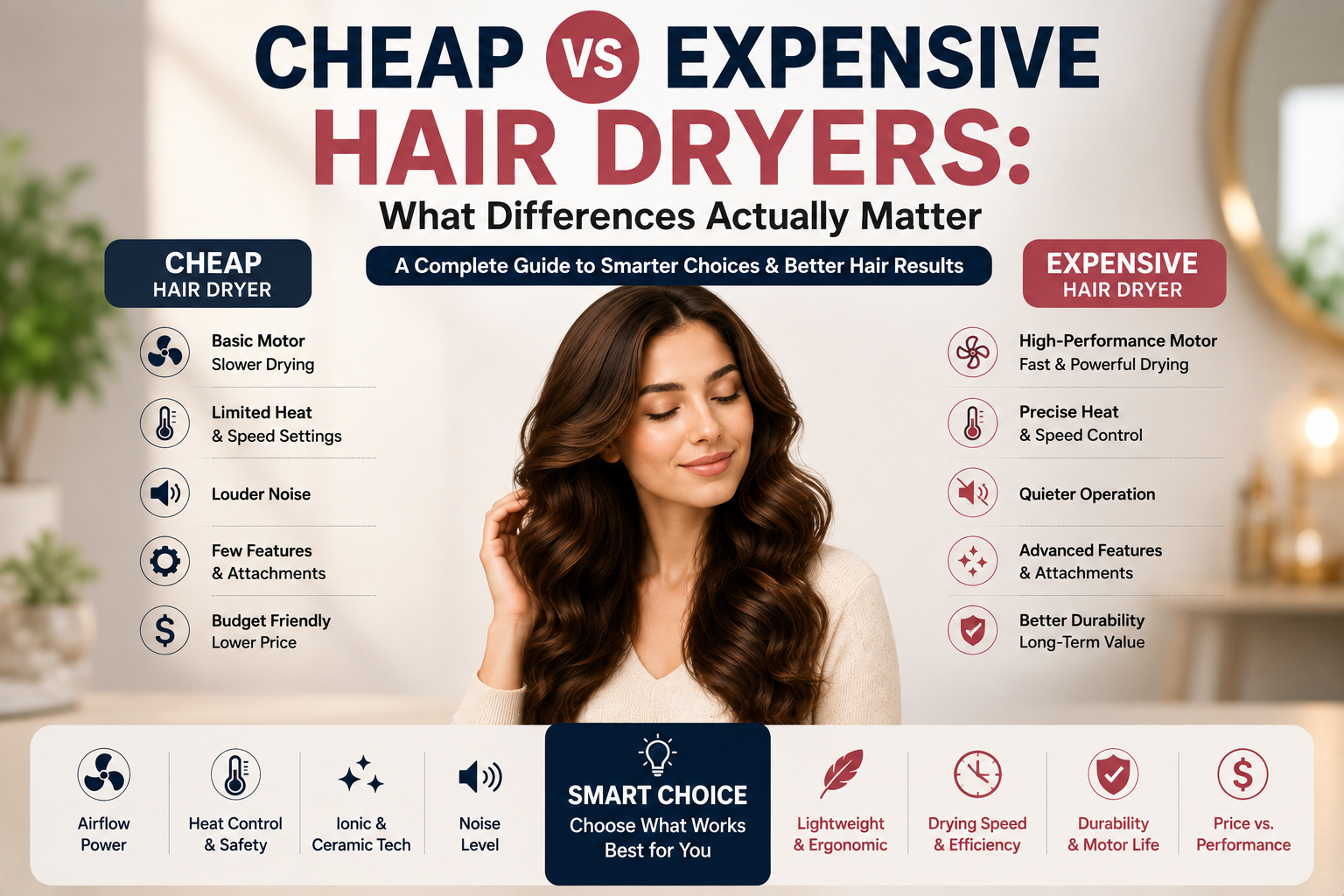
Cheap Vs Expensive Hair Dryers: What Differences Actually Matter?
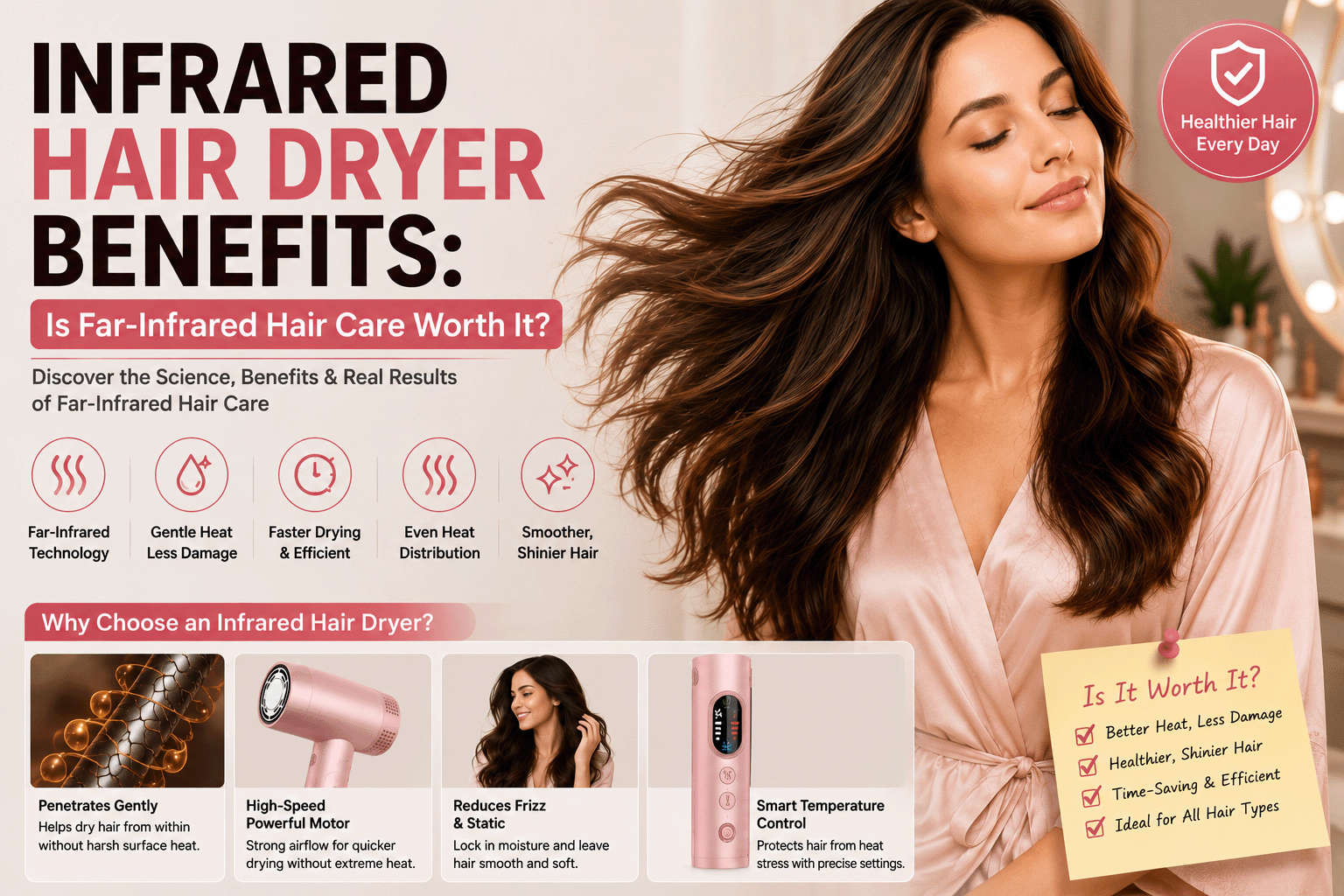
Infrared Hair Dryer Benefits: Is Far-Infrared Hair Care Worth It?
Related Article