Hair Dryer For Fine Thin Hair : How To Add Volume Without Damage
Hair Dryer For Fine Thin Hair : How To Add Volume Without Damage
For people with fine or thin hair, creating long-lasting volume can feel challenging. Hair often becomes flat quickly, loses shape after styling, or looks limp after using the wrong drying technique.
The biggest question many people ask is:
How can I use a hair dryer for fine thin hair to add volume without damage?
The answer is not simply choosing the hottest or most powerful dryer. Fine and thin hair requires a balance between controlled airflow, gentle heat, proper styling techniques, and the right hair dryer features.
This complete guide explains how to choose and use a Hair Dryer For Fine Thin Hair : How To Add Volume Without Damage, including the best drying methods, mistakes to avoid, and professional tips for creating fuller-looking hair while protecting delicate strands.

Hair Dryer For Fine Thin Hair : How To Add Volume Without Damage
Fine and thin hair has unique styling challenges.
Unlike thick hair, fine strands have a smaller diameter and can become weighed down easily. Excessive heat, heavy styling products, or incorrect blow-drying techniques may make hair look flatter instead of fuller.
A suitable hair dryer for fine thin hair should help you achieve:
- More root lift
- Lightweight volume
- Smooth texture
- Reduced frizz
- Faster drying time
- Less heat stress
The goal is not maximum heat.
The goal is controlled drying that creates volume without sacrificing hair health.
Why Fine Thin Hair Needs a Different Hair Dryer
Fine Hair vs Thin Hair: What Is The Difference?
Many people use "fine hair" and "thin hair" interchangeably, but they describe different things.
Fine Hair
Fine hair refers to the diameter of each individual strand.
A fine strand is thinner and usually more sensitive to heat and styling stress.
Thin Hair
Thin hair refers to the number of hairs on the scalp.
Someone can have:
- Fine hair with high density
- Thick strands with low density
- Fine and thin hair together
Understanding your hair type helps you choose the right drying method.
Why Does Fine Thin Hair Lose Volume Easily?
Fine thin hair often struggles with volume because:
1. Hair Strands Are Lightweight
Fine strands cannot hold heavy styling products easily.
Too much oil, cream, or conditioner can make hair appear flat.
2. Roots Collapse Quickly
The lighter the hair, the easier gravity pulls it downward.
This is why root-lifting techniques are important.
3. Heat Damage Appears Faster
Fine hair has less structural protection compared with thicker strands.
Repeated high heat can contribute to dryness, weakness, and breakage.
A good hair dryer for fine thin hair should therefore provide styling control rather than excessive heat output.
What Features Should A Hair Dryer For Fine Thin Hair Have?
Choosing the right dryer is one of the most important steps for adding volume without damage.
1. Adjustable Heat Settings
Fine hair does not usually need maximum temperature.
A dryer with multiple heat settings allows you to adjust according to your hair condition.
Look for:
- Low heat option
- Medium heat option
- Cool shot button
- Adjustable airflow
Using lower or medium heat can help reduce unnecessary heat exposure while maintaining styling flexibility.
2. Strong But Controlled Airflow
Many people think fine hair needs less powerful airflow.
However, airflow efficiency is important.
A good dryer should remove moisture quickly without forcing you to use excessive heat.
The best hair dryer for fine thin hair to add volume should provide:
- Fast drying speed
- Gentle heat control
- Even airflow distribution
3. Lightweight Design
Weight matters more than many people realize.
When styling fine hair, you often need precise control around the roots.
A lightweight hair dryer allows you to:
- Lift sections easily
- Control angles better
- Style longer without hand fatigue
4. Ionic Technology
Ionic hair dryers are often designed to reduce static and improve smoothness.
For fine hair, this can help control:
- Flyaways
- Frizz
- Rough texture
However, too much smoothing can sometimes reduce volume.
Fine hair users should look for a balance between:
Smoothness + Body + Natural Movement
5. Concentrator Nozzle Attachment
A concentrator nozzle helps direct airflow exactly where you need it.
It is useful for:
- Root lifting
- Creating a smooth blowout
- Controlling frizz
- Styling sections individually
For fine thin hair, controlled airflow is usually more effective than random high-speed drying.
6. Diffuser Attachment For Fine Wavy Hair
If your fine hair is naturally wavy or curly, a diffuser can help maintain texture.
It distributes airflow more gently and helps prevent curls from becoming flat or frizzy.
How To Use A Hair Dryer For Fine Thin Hair To Add Volume
The technique you use matters as much as the dryer itself.
Here is a step-by-step routine.
Step 1: Start With The Right Preparation
Do not immediately blast soaking wet hair with high heat.
First:
- Gently remove excess water.
- Avoid aggressive towel rubbing.
- Apply a lightweight heat protectant.
- Detangle carefully.
Fine hair is more fragile when wet, so gentle handling before blow drying is important.
Step 2: Apply Lightweight Volume Products
Heavy products can make fine hair look flatter.
Choose lightweight formulas such as:
- Volumizing mousse
- Root lift spray
- Lightweight styling foam
- Texturizing spray
Avoid applying too much product near the roots.
Too much weight can cancel out your volume.
Step 3: Rough Dry The Roots First
The roots determine how much volume your hairstyle has.
For more lift:
- Tilt your head slightly forward.
- Lift hair away from the scalp.
- Direct airflow toward the roots.
- Keep the dryer moving.
Drying roots upward helps create a fuller appearance.
Professional styling advice commonly recommends lifting roots and using controlled airflow when blow-drying fine hair for volume.
Step 4: Use A Round Brush For Maximum Volume
Once hair is about 70–80% dry:
Separate hair into sections.
Then:
- Place the round brush under the roots.
- Lift upward.
- Direct warm airflow along the brush.
- Hold briefly.
- Finish with cool air.
The cool shot function helps set the shape and maintain lift.
Step 5: Finish With Cool Air
Many people skip this step.
However, finishing with cool airflow can help:
- Reduce frizz
- Improve shine
- Support longer-lasting styling
For fine hair, this step can make the difference between temporary volume and volume that lasts.
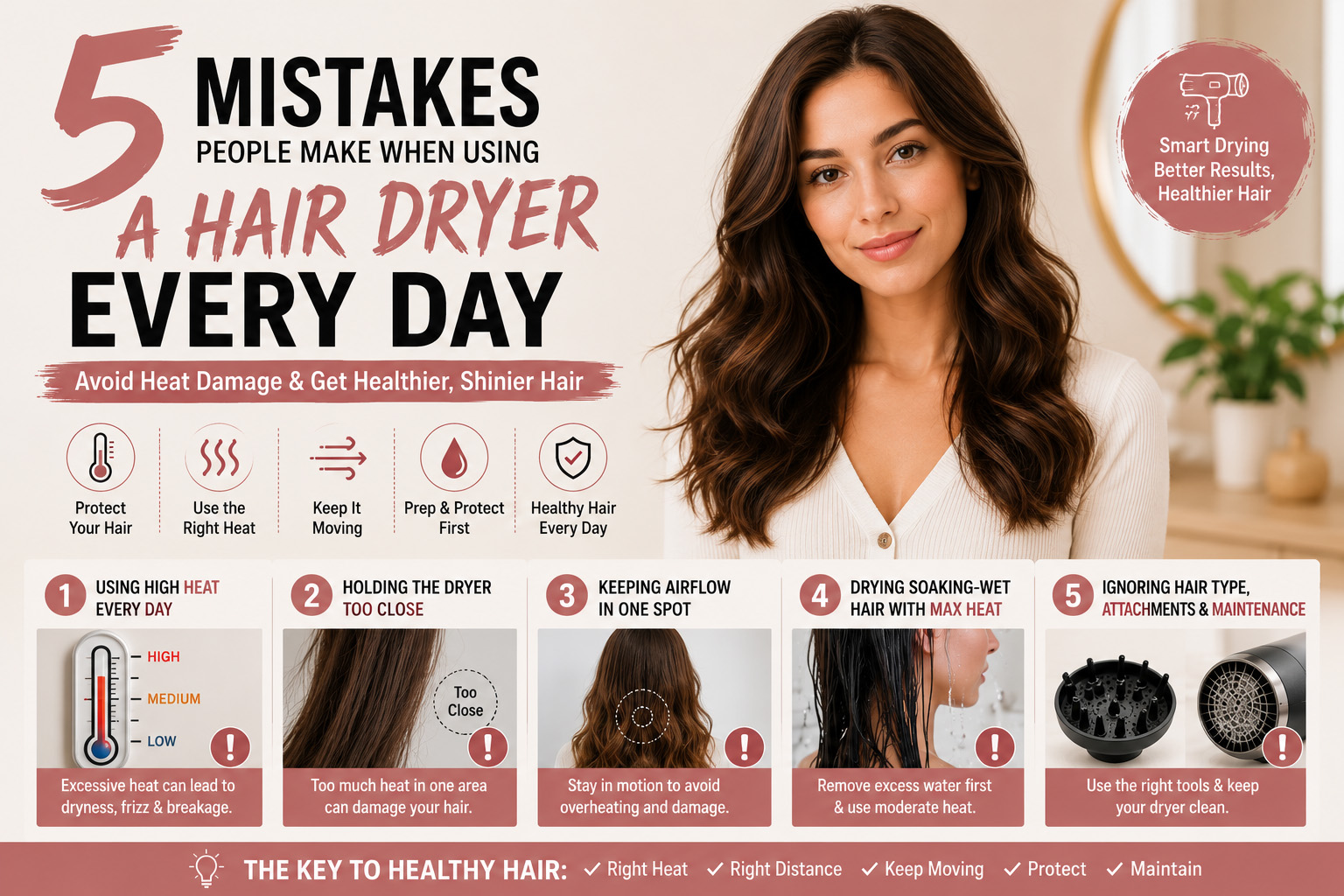
Common Mistakes When Blow Drying Fine Thin Hair
Mistake 1: Using Maximum Heat
High heat does not automatically create more volume.
It can make fine hair:
- Dry
- Weak
- Frizzy
- Difficult to style
Better approach:
Use medium heat with controlled airflow.
Mistake 2: Holding The Dryer Too Close
Direct intense heat can stress delicate strands.
Keep the dryer moving and avoid concentrating heat in one place.
Mistake 3: Over-Smoothing The Hair
Many fine-haired users accidentally remove their own volume.
Examples:
- Excessive brushing
- Heavy oils
- Too much conditioner
- Strong smoothing products
Volume requires some natural movement.
Mistake 4: Drying Hair Completely Flat
If you dry hair downward against the scalp, roots may lose lift.
Instead:
Lift roots upward while drying.
Mistake 5: Choosing The Wrong Hair Dryer
A very hot dryer without proper controls may not be ideal for fine thin hair.
The best choice is a dryer that offers:
- Temperature control
- Airflow control
- Lightweight handling
- Suitable attachments
Best Hair Dryer Settings For Fine Thin Hair
| Hair Type | Heat Setting | Airflow | Styling Goal |
|---|---|---|---|
| Fine straight hair | Low-medium | Medium | Soft volume |
| Fine oily hair | Medium | Medium-high | Lift roots |
| Fine dry hair | Low | Low-medium | Protect moisture |
| Fine wavy hair | Low-medium | Low | Maintain texture |
| Fine damaged hair | Low | Gentle | Reduce stress |

How To Add Volume To Fine Thin Hair Without Damage
Use Root-Focused Drying
Most volume comes from the roots, not the ends.
Focus airflow where lift is needed.
Avoid Heavy Hair Products
Fine hair becomes flat easily.
Choose lightweight products designed for volume.
Reduce Heat Exposure Time
A powerful but controlled dryer can actually be better because it reduces the amount of time hair spends under heat.
Maintain Your Hair Dryer
A dirty filter can reduce airflow efficiency.
Regular maintenance helps your dryer work properly.
Check:
- Air intake
- Filter cleanliness
- Attachments
- Power cord condition
Hair Dryer For Fine Thin Hair: How To Choose The Right One
When searching for the best hair dryer for fine thin hair, focus on these questions:
Does It Have Adjustable Heat?
Fine hair needs flexibility.
Is It Lightweight?
Comfort improves styling control.
Does It Provide Strong Airflow Without Excessive Heat?
Efficient drying helps protect strands.
Does It Include Useful Attachments?
A concentrator nozzle and diffuser can improve styling results.
Can It Create Volume Without Flattening Hair?
The right dryer should support movement, not remove it.
Best Blow Drying Routine For Fine Thin Hair
A simple daily routine:
Before Drying
✔ Remove excess moisture
✔ Apply lightweight heat protection
✔ Detangle gently
During Drying
✔ Start with roots
✔ Use medium heat
✔ Lift sections upward
✔ Keep airflow moving
After Drying
✔ Use cool air
✔ Avoid heavy products
✔ Shape with fingers instead of excessive brushing
FAQ: Hair Dryer For Fine Thin Hair : How To Add Volume Without Damage
Is using a hair dryer bad for fine thin hair?
Not necessarily.
The problem is usually excessive heat, incorrect technique, or using the wrong settings.
A controlled blow-drying routine can create volume while protecting hair.
What is the best heat setting for fine thin hair?
Low to medium heat is usually a better starting point.
Fine hair often benefits from controlled temperature rather than maximum heat.
How can I make fine hair look thicker with a hair dryer?
Try:
- Lifting roots while drying
- Using a round brush
- Applying lightweight volumizing products
- Finishing with cool air
Should fine hair use ionic hair dryers?
Ionic technology may help reduce static and frizz.
However, volume-focused styling also requires airflow control and proper technique.
What is the best hair dryer attachment for fine hair?
A concentrator nozzle is useful for creating controlled volume.
A diffuser is helpful for fine curly or wavy hair.
How do I stop my fine hair from becoming flat after blow drying?
Avoid:
- Heavy products
- Excessive smoothing
- High heat
- Over-brushing
Focus on root lift and lightweight styling.
Final Thoughts
Finding the right Hair Dryer For Fine Thin Hair : How To Add Volume Without Damage is not about choosing the hottest or most powerful tool.
The best results come from combining:
- The right dryer features
- Proper temperature control
- Root-focused styling
- Lightweight products
- Gentle drying techniques
Fine thin hair can absolutely achieve beautiful volume without sacrificing health.
The key is simple:
Use controlled heat, create lift at the roots, and treat delicate strands with care.
With the right approach, your hair dryer can become a powerful tool for achieving fuller, shinier, and healthier-looking hair every day.

📬 Contact Information
Contact Person: Jenny
Tel / WhatsApp / WeChat: +86 137 1719 2238
Address: No. 12, Donghuan 2nd Road, Huangjiang Town, Dongguan, Guangdong, China
For partnership inquiries, distribution, private label OEM, or large-scale projects, please reach out directly.
Welcome to Hongya!
17+ years OEM/ODMproduction experience.
Main products include: HairDryers, Hot Air Brush, HairStraighteners, Hair Curlers,Hair Straightener Brushes,etc.
20+R&D staff
280+ employees.
15000+ ㎡ factories.
100,000+ PCS MonthlyProduction.
Currently developing200+ products.
Patents/Certifications support Online Query.

5 Mistakes People Make When Using A Hair Dryer Every Day
Related Article