How Hot Should a Hair Dryer Be? Understanding Safe Heat Settings
How Hot Should a Hair Dryer Be? Understanding Safe Heat Settings
How hot should a hair dryer be? This is one of the most common questions people ask when trying to dry their hair quickly without causing dryness, frizz, breakage, or heat damage.
The answer is not simply “the lower, the better.”
The ideal hair dryer temperature depends on your hair type, hair thickness, moisture level, drying distance, airflow, and styling goal. Fine or damaged hair usually needs gentler heat, while thick or coarse hair may require more airflow and carefully controlled heat.
Understanding how hot should a hair dryer be can help you choose the right setting and build a safer daily hair-drying routine.
In this guide, we explain safe hair dryer heat settings, how temperature affects hair, how far to hold a hair dryer from your head, and how to choose the right heat for fine, thick, curly, thin, and damaged hair.
For most everyday users:
Low/medium heat + controlled airflow + approximately 15 cm distance + continuous movement = a better approach to minimizing unnecessary heat exposure.
What Temperature Should a Hair Dryer Be?
One important detail is often misunderstood.
The temperature shown by a hair dryer manufacturer is not necessarily the same as the temperature actually reaching your hair.
The perceived heat at the hair depends on:
- Dryer temperature
- Airflow speed
- Distance from the hair
- Drying time
- Room temperature
- Hair moisture
- Hair density
- Hair condition
Therefore, asking how hot should a hair dryer be is more useful when you consider the entire drying process rather than looking for one exact number.
Is There a Safe Hair Dryer Temperature?
There is no universally established temperature that guarantees zero hair damage.
Hair dryers can produce significantly different temperatures depending on their design and settings.
One controlled study tested drying conditions of approximately 47°C, 61°C, and 95°C at different distances. The researchers observed increasing hair-surface damage as temperature increased.
This does not mean that 47°C is a guaranteed “safe temperature.”
It means that temperature and distance both matter.
Why 60°C Should Not Be Treated as a Universal Limit
Some older hair research identified approximately 60°C as a favorable drying condition under specific experimental circumstances. However, this should not be interpreted as a universal consumer safety threshold for every hair dryer or hair type.
Real-world hair drying involves different airflow speeds, distances, drying times, hair textures, and dryer designs.
The better approach is to use the lowest effective heat setting.
How Does Hair Dryer Heat Damage Hair?
Understanding heat damage makes it easier to understand how hot should a hair dryer be.
Hair is made primarily of keratin and has a protective outer cuticle.
Repeated exposure to excessive heat can affect the hair surface and contribute to changes such as dryness, roughness, and loss of smoothness.
A study examining repeated hair-dryer use found that surface damage increased with higher drying temperatures.
More recent research also demonstrates that prolonged and frequent heat exposure can produce measurable changes in hair-fiber properties and cuticle morphology.
Signs Your Hair Dryer May Be Too Hot
Watch for:
- Hair feeling unusually dry
- Increased frizz
- Rough texture
- More tangling
- Split ends
- Loss of shine
- Increased breakage
- Scalp discomfort
If the air feels uncomfortably hot against your scalp, the temperature is likely too aggressive for that area.
Best Hair Dryer Heat Settings for Different Hair Types
The best answer to how hot should a hair dryer be changes depending on your hair.
There is no reason to use the same temperature for fine hair and thick, coarse hair.
| Hair Type | Recommended Starting Setting | Main Goal |
|---|---|---|
| Fine hair | Low | Minimize heat exposure |
| Thin hair | Low–Medium | Dry gently while maintaining volume |
| Straight hair | Low–Medium | Efficient drying and smoothness |
| Wavy hair | Low–Medium | Preserve texture |
| Curly hair | Low–Medium | Reduce frizz and protect curl pattern |
| Thick hair | Medium | Balance drying speed and heat |
| Coarse hair | Medium | Use airflow efficiently |
| Damaged hair | Lowest effective setting | Minimize additional stress |
| Chemically treated hair | Low–Medium | Reduce excessive heat exposure |
These are starting points rather than fixed temperature prescriptions.
Your hair may require adjustments depending on how quickly it dries and how it responds to heat.
How Hot Should a Hair Dryer Be for Fine Hair?
Fine hair generally benefits from lower heat.
Because individual fine strands have less diameter, aggressive heat can be unnecessary during everyday drying.
Start with:
- Low heat
- Moderate airflow
- Several inches of distance
- Continuous movement
If you need more volume, focus on your drying technique rather than simply increasing temperature.
Best Hair Dryer Setting for Fine Hair
A useful routine is:
Low heat → moderate airflow → lift roots → keep dryer moving → cool-air finish
A dryer with multiple heat and speed settings can make this easier.
How Hot Should a Hair Dryer Be for Thin Hair?
Thin hair can mean low hair density rather than fine individual strands.
For thin hair, excessive heat can make the hair feel dry while providing little benefit.
Use low to medium heat and focus on controlled root drying.
Avoid directing very hot air continuously toward the scalp.
How to Dry Thin Hair Without Damage
- Remove excess water first.
- Apply a heat protectant.
- Start with low heat.
- Use moderate airflow.
- Lift the roots gently.
- Keep the dryer moving.
- Finish with cool air.
How Hot Should a Hair Dryer Be for Thick Hair?
Thick hair often takes longer to dry.
That does not automatically mean you should use maximum heat.
Instead, improve efficiency by removing excess water before blow drying and using sufficient airflow.
Best Hair Dryer Temperature for Thick Hair
Start with medium heat.
If your hair is still very wet, use stronger airflow rather than immediately choosing the hottest temperature.
Once the hair becomes mostly dry, reduce the heat for styling.
How Hot Should a Hair Dryer Be for Curly Hair?
Curly and textured hair often requires a different approach.
Direct, aggressive airflow can disturb the curl pattern and increase frizz.
A diffuser can help distribute airflow more evenly.
Best Heat Setting for Curly Hair
For most curly hair routines:
- Use low or medium heat.
- Use a diffuser.
- Avoid maximum heat.
- Keep drying time as short as practical.
- Avoid repeatedly drying the same area.
The AAD recommends limiting excessive heat and using low or medium settings to reduce heat-related hair damage.
Should You Use High Heat on Curly Hair?
Usually, there is little reason to start with maximum heat.
If your curls take longer to dry, improve airflow and sectioning rather than automatically increasing temperature.
How Hot Should a Hair Dryer Be for Damaged Hair?
If your hair is already damaged, heat management becomes even more important.
Damaged hair can be more fragile and prone to breakage.
The safest approach is to minimize unnecessary heat exposure.
Recommended Approach for Damaged Hair
Use:
- Lowest effective heat
- Gentle airflow
- Heat protectant
- Greater drying distance
- Shorter drying sessions
- Cool air when possible
How Far Should a Hair Dryer Be From Your Hair?
Temperature is only part of the equation.
Distance matters too.
A hair dryer held very close to the hair concentrates hot airflow over a small area.
Research examining hair-dryer conditions found that drying at 15 cm with continuous movement produced less surface damage than some closer and hotter conditions tested in the study.
Is 6 Inches a Safe Hair Dryer Distance?
Approximately 15 cm, or 6 inches, is a useful practical starting point.
However, it should not be treated as a universal safety rule.
If the airflow feels excessively hot, move the dryer farther away or lower the temperature.
Why You Should Keep the Hair Dryer Moving
Keeping the dryer in one position allows heat to build up on a small section.
Instead, move the dryer continuously.
This distributes heat across a larger area.
Better Blow-Drying Technique
Instead of:
Hot air → One spot → Long exposure
Try:
Moderate heat → Moving airflow → Even exposure → Shorter passes
The hair-dryer study specifically found that continuous movement at a greater distance reduced surface damage compared with some close-range drying conditions.
What Is the Best Hair Dryer Heat Setting?
The best hair dryer heat setting is the lowest effective setting that dries and styles your hair efficiently.
This is more useful than choosing a specific number.
Low Heat
Best for:
- Fine hair
- Thin hair
- Damaged hair
- Frequent drying
- Final styling
Low heat provides greater protection against unnecessary heat exposure, although it may increase drying time.
Medium Heat
Best for:
- Everyday drying
- Normal hair
- Wavy hair
- Controlled styling
- General-purpose use
For many users, medium heat is a practical balance between drying speed and heat control.
High Heat
High heat can be useful in limited situations, particularly when more drying power is needed.
However, it should not automatically be your default setting.
Excessive heat can damage hair, and the AAD recommends low or medium heat whenever possible.
What About Hair Dryer Speed Settings?
Temperature and airflow should be considered together.
A higher airflow setting can help remove moisture faster.
A lower airflow setting provides greater control during styling.
Best Heat and Speed Combination
A practical routine is:
Rough Drying
Medium heat + higher airflow
Use this stage to remove excess moisture efficiently.
Styling
Low/medium heat + moderate airflow
Use a concentrator and brush if you want a smoother finish.
Finishing
Cool air + controlled airflow
Use cool air after styling when appropriate.
How to Use a Hair Dryer Without Excessive Heat Damage
Knowing how hot should a hair dryer be is only the first step.
Your technique matters just as much.
Step 1: Remove Excess Water
Gently squeeze out water after washing.
Do not aggressively rub wet hair with a towel.
Step 2: Apply Heat Protectant
Use a heat-protective product according to its instructions.
Heat protectant is an additional protective step, not permission to use maximum heat.
Step 3: Let Hair Partially Air Dry
When your schedule allows, let some moisture evaporate naturally before blow drying.
The AAD recommends allowing hair to partially air dry before styling when possible.
Step 4: Start With Low or Medium Heat
Do not immediately select the hottest setting.
Start lower and increase only if necessary.
Step 5: Maintain Distance
Keep the dryer approximately 15 cm away as a practical starting point.
Step 6: Keep the Dryer Moving
Avoid concentrating heat on one area.
Step 7: Reduce Heat During Styling
Once most moisture is gone, switch to lower heat.
Step 8: Finish With Cool Air
Use the cool setting to finish your style when appropriate.
How Hot Should a Hair Dryer Be for Daily Use?
If you blow dry your hair every day, heat management becomes especially important.
Daily use does not mean you must stop using a hair dryer completely.
Instead, reduce unnecessary exposure.
Tips for Everyday Blow Drying
- Use low or medium heat.
- Avoid maximum temperature by default.
- Remove excess water first.
- Keep the dryer moving.
- Maintain distance.
- Use a heat protectant.
- Avoid repeatedly drying the same section.
- Allow partial air drying when possible.
- Clean the dryer filter regularly.
Can a Hair Dryer Be Too Hot for Your Scalp?
Yes.
A temperature that is uncomfortable or painful on the scalp is a clear signal to reduce the heat or increase the distance.
Hair dryers can produce sufficiently high temperatures to cause thermal injury when used improperly. Published medical reports have documented hair-dryer burns, particularly when hot airflow is held close to skin for extended periods.
Stop if You Notice:
- Burning sensation
- Pain
- Significant heat discomfort
- Redness
- Scalp irritation
Never intentionally test how hot your dryer can get against your scalp.
Does a High-Speed Hair Dryer Need High Heat?
No.
A high-speed hair dryer can move a large amount of air without requiring the highest available heat setting.
This is one reason airflow and temperature should be considered separately.
High Airflow vs High Heat
High airflow:
- Can help remove moisture faster
- Can reduce drying time
- Useful for rough drying
High heat:
- Raises thermal exposure
- Can increase heat-related damage
- Should be used more selectively
For many users, increasing airflow is preferable to simply increasing temperature.
What Hair Dryer Features Help With Heat Control?
If you are buying a new dryer, look beyond wattage and marketing claims.
Multiple Heat Settings
Choose a dryer with several heat options.
Multiple Speed Settings
Different airflow speeds help you switch between fast drying and controlled styling.
Cool Shot
A cool-air setting is useful for finishing styles.
Concentrator Nozzle
A concentrator provides more directional airflow for smooth styling.
Diffuser
A diffuser is particularly useful for curly and wavy hair.
Temperature Control Technology
Some modern dryers include sensors or electronic temperature management.
These features can help provide more consistent heat, but they do not eliminate the need for good drying technique.
Does Ionic Technology Reduce Heat Damage?
Ionic technology is commonly promoted for faster drying, reduced static, and smoother-looking hair.
However, ionic technology does not make excessive heat harmless.
Even an ionic hair dryer should be used with:
- Appropriate heat
- Controlled airflow
- Proper distance
- Continuous movement
- Limited drying time
The technology can complement good technique, but it does not replace it.
Common Mistakes When Choosing Hair Dryer Temperature
Using Maximum Heat Because Hair Is Thick
Thick hair may need stronger airflow and longer drying time.
That does not automatically mean maximum temperature is necessary.
Using One Temperature for Every Hair Type
Fine hair, curly hair, thick hair, and damaged hair have different needs.
Holding the Dryer Too Close
Even a moderate setting can become excessively hot when the nozzle is held very close.
Keeping the Dryer in One Place
Continuous exposure to one area increases localized heat exposure.
Ignoring Drying Time
The longer hair is exposed to heat, the more important temperature and distance become.
Using Heat Protectant as a “Free Pass”
Heat protectant can be useful, but it does not make unlimited high-temperature drying safe.
Hair Dryer Temperature vs Drying Distance
One of the most important concepts in How Hot Should a Hair Dryer Be? Understanding Safe Heat Settings is that temperature cannot be considered separately from distance.
| Drying Condition | Potential Concern |
|---|---|
| Low heat + greater distance | Lower heat exposure |
| Medium heat + moving airflow | Balanced everyday approach |
| High airflow + moderate heat | Faster drying with controlled temperature |
| High heat + greater distance | Still requires caution |
| High heat + close distance | Greater localized heat exposure |
| High heat + close distance + no movement | Highest-risk technique |
The controlled study cited earlier showed clear differences between 15 cm, 10 cm, and 5 cm drying conditions, with higher temperatures associated with greater hair-surface damage.
FAQ: How Hot Should a Hair Dryer Be?
What temperature is safe for a hair dryer?
There is no single temperature that is universally safe for every hair type and dryer.
For everyday use, low or medium heat is generally the best starting point. The AAD recommends low or medium heat to help reduce heat damage.
Is 60°C too hot for a hair dryer?
Not necessarily, but 60°C should not be considered a universal safe limit.
The actual effect depends on distance, airflow, drying time, and hair condition.
Research has shown that different combinations of temperature and distance produce different levels of hair-surface damage.
Is 100°C too hot for a hair dryer?
Air temperatures around 100°C are extremely hot and should not be treated as a normal everyday target for hair drying.
Higher temperatures increase the potential for hair-surface damage and can also create a burn risk if hot airflow is directed at skin for too long.
How hot should a hair dryer be for fine hair?
Fine hair generally benefits from low to medium heat.
Start with the lowest effective setting and use controlled airflow rather than relying on maximum temperature.
How hot should a hair dryer be for thick hair?
Thick hair may benefit from medium heat and stronger airflow, particularly during the initial drying stage.
However, maximum heat is not automatically necessary.
What is the best temperature for blow drying hair?
For most everyday users, low to medium heat is a practical starting point.
The ideal setting should be adjusted according to hair type, drying speed, distance, and styling requirements.
Is it better to use high heat or high speed on a hair dryer?
For many situations, increasing airflow can be more useful than simply increasing heat.
High airflow can help remove moisture, while lower heat reduces unnecessary thermal exposure.
How far should I hold a hair dryer from my hair?
Approximately 15 cm or 6 inches is a useful practical starting point.
Research found that drying at this distance with continuous movement produced less surface damage than some closer, hotter conditions tested.
Can I use a hair dryer every day?
Frequent blow drying increases cumulative heat exposure.
If you use a hair dryer every day, use low or medium heat, keep the dryer moving, maintain distance, and allow partial air drying when practical. The AAD recommends limiting blow drying and excessive heat exposure.
Final Verdict: How Hot Should a Hair Dryer Be?
So, How Hot Should a Hair Dryer Be? Understanding Safe Heat Settings comes down to one key principle:
Use the lowest effective heat that dries and styles your hair efficiently.
There is no universal “perfect” temperature.
Fine, thin, or damaged hair usually benefits from gentler heat. Thick hair may require more airflow and moderate heat to reduce drying time. Curly hair can benefit from controlled airflow and a diffuser.
Most importantly, do not judge heat safety by temperature alone.
Use the right combination of:
Temperature + Airflow + Distance + Movement + Drying Time
For everyday hair care, start with low or medium heat, keep the dryer moving, hold it approximately 15 cm away as a practical starting point, and reduce heat exposure whenever possible.
That approach can help you dry your hair efficiently while minimizing unnecessary heat stress.
📬 Contact Information
Contact Person: Jenny
Tel / WhatsApp / WeChat: +86 137 1719 2238
Address: No. 12, Donghuan 2nd Road, Huangjiang Town, Dongguan, Guangdong, China
For partnership inquiries, distribution, private label OEM, or large-scale projects, please reach out directly.
Welcome to Hongya!
17+ years OEM/ODMproduction experience.
Main products include: HairDryers, Hot Air Brush, HairStraighteners, Hair Curlers,Hair Straightener Brushes,etc.
20+R&D staff
280+ employees.
15000+ ㎡ factories.
100,000+ PCS MonthlyProduction.
Currently developing200+ products.
Patents/Certifications support Online Query.

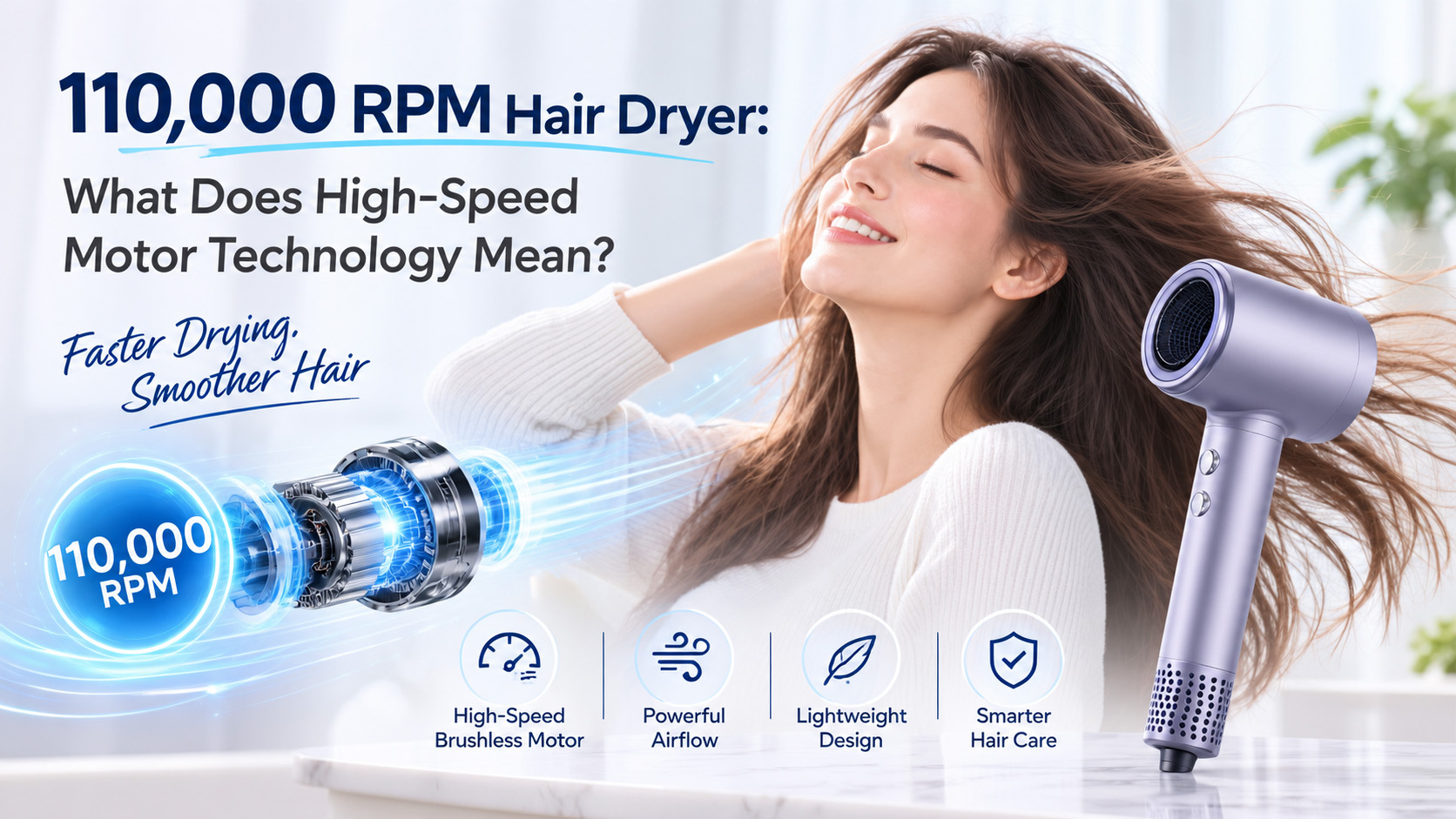
110,000 RPM Hair Dryer: What Does High-Speed Motor Technology Mean?
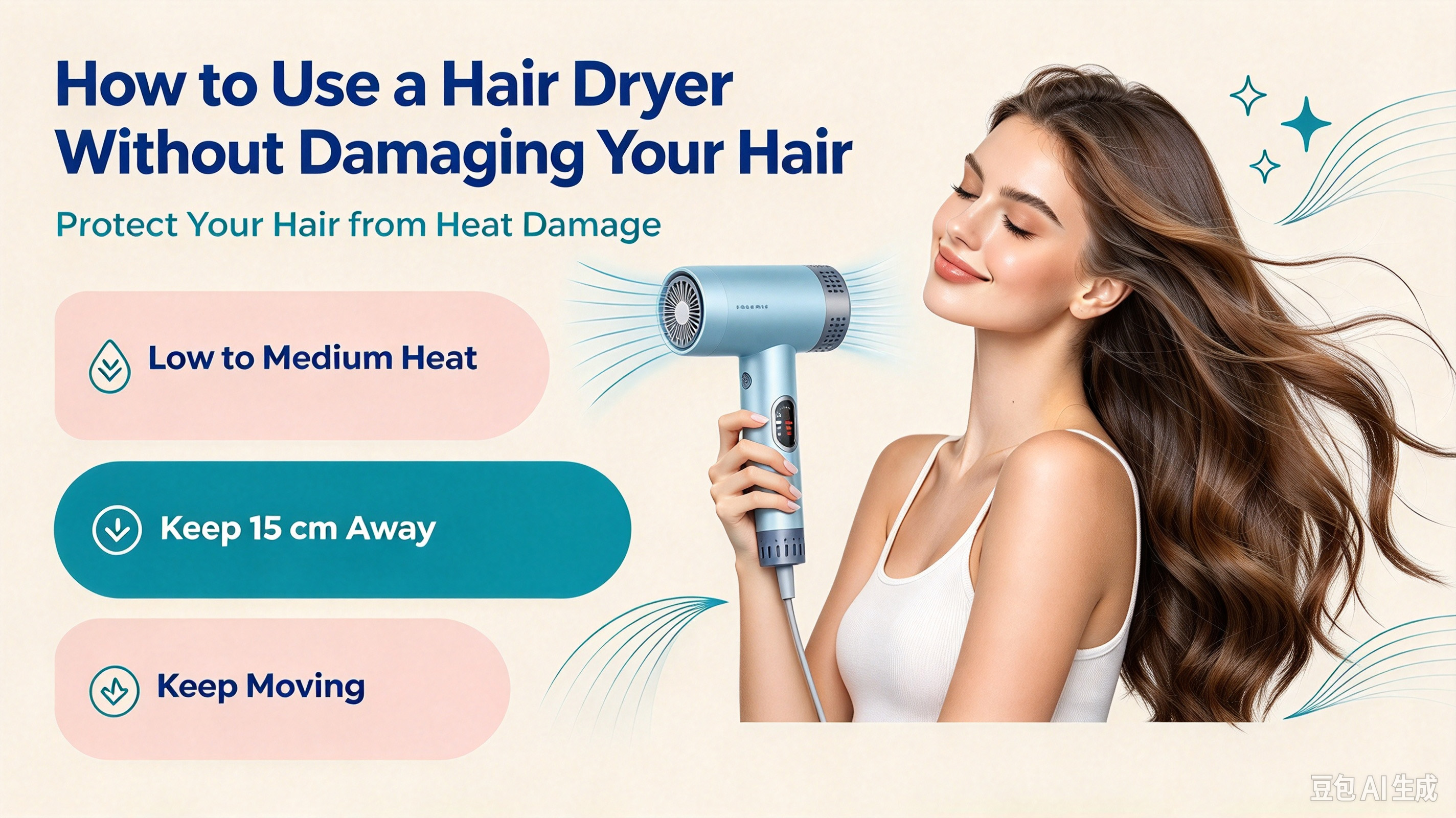
How to Use a Hair Dryer Without Damaging Your Hair
Related Article
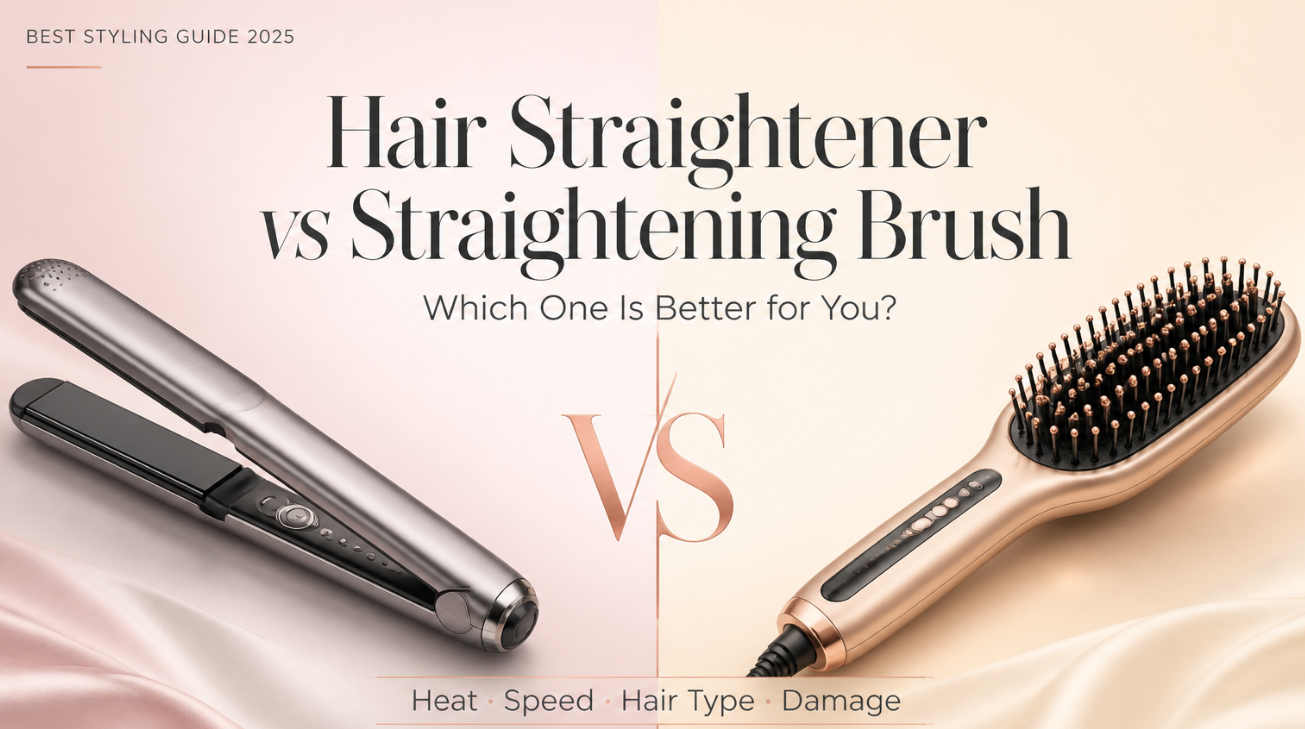
This guide breaks down the real differences so you can pick the right tool with confidence.