How to Use a Hair Dryer Without Damaging Your Hair
How to Use a Hair Dryer Without Damaging Your Hair
Using a hair dryer is one of the fastest ways to dry and style your hair. However, excessive heat, high airflow, and improper drying techniques can contribute to dryness, frizz, split ends, and surface damage.
So, how to use a hair dryer without damaging your hair?
The key is not to avoid hair dryers completely. Instead, use the right temperature, airflow, distance, movement, and preparation techniques. Dermatologists recommend limiting excessive heat and using low or medium heat settings whenever possible.
This guide explains how to use a hair dryer without damaging your hair, including the best hair dryer settings, drying distance, heat protection, techniques for different hair types, and common mistakes to avoid.

Can a Hair Dryer Damage Your Hair?
Yes, a hair dryer can contribute to hair damage when it is used incorrectly.
Repeated exposure to excessive heat can affect the hair surface and contribute to dryness and roughness. A laboratory study published in Annals of Dermatology found that hair surface damage increased as drying temperature increased. The study also found that using a dryer at a greater distance while continuously moving it caused less damage than very close, high-temperature drying.
This does not mean that every use of a hair dryer will damage your hair.
In fact, how you use a hair dryer matters significantly.
Using moderate heat, maintaining distance, keeping the dryer moving, and reducing drying time can help minimize unnecessary heat exposure.
How to Use a Hair Dryer Without Damaging Your Hair
If you want to know how to use a hair dryer without damaging your hair, follow these steps.
1. Remove Excess Water Before Blow Drying
Do not start with completely soaking-wet hair.
After washing, gently squeeze out excess water with your hands. Then wrap your hair in a soft towel or microfiber towel.
Avoid aggressively rubbing your hair with a towel.
Hair is more fragile when wet, and rough towel drying can increase mechanical stress and breakage. The American Academy of Dermatology recommends gently wrapping the hair with a towel or T-shirt to absorb excess moisture.
Why Should You Partially Dry Your Hair First?
Starting with slightly damp hair can reduce the amount of time your hair needs to be exposed to heated airflow.
For people searching for how to blow dry hair without damage, this is one of the simplest steps to add to a daily routine.
2. Apply a Heat Protectant
A heat protectant should be part of your routine if you regularly use heated styling tools.
Apply a suitable heat-protective product according to its instructions, especially to the lengths and ends of your hair.
Heat protectants do not make hair completely immune to heat damage. Their purpose is to provide an additional layer of protection during heat styling.
The AAD recommends using a product designed to protect hair from heat while also reducing the use of excessive heat.
How Much Heat Protectant Should You Use?
The correct amount depends on the product and your hair length and density.
Avoid applying excessive amounts, especially near the roots if your hair is fine or easily weighed down.
Distribute the product evenly before turning on your hair dryer.
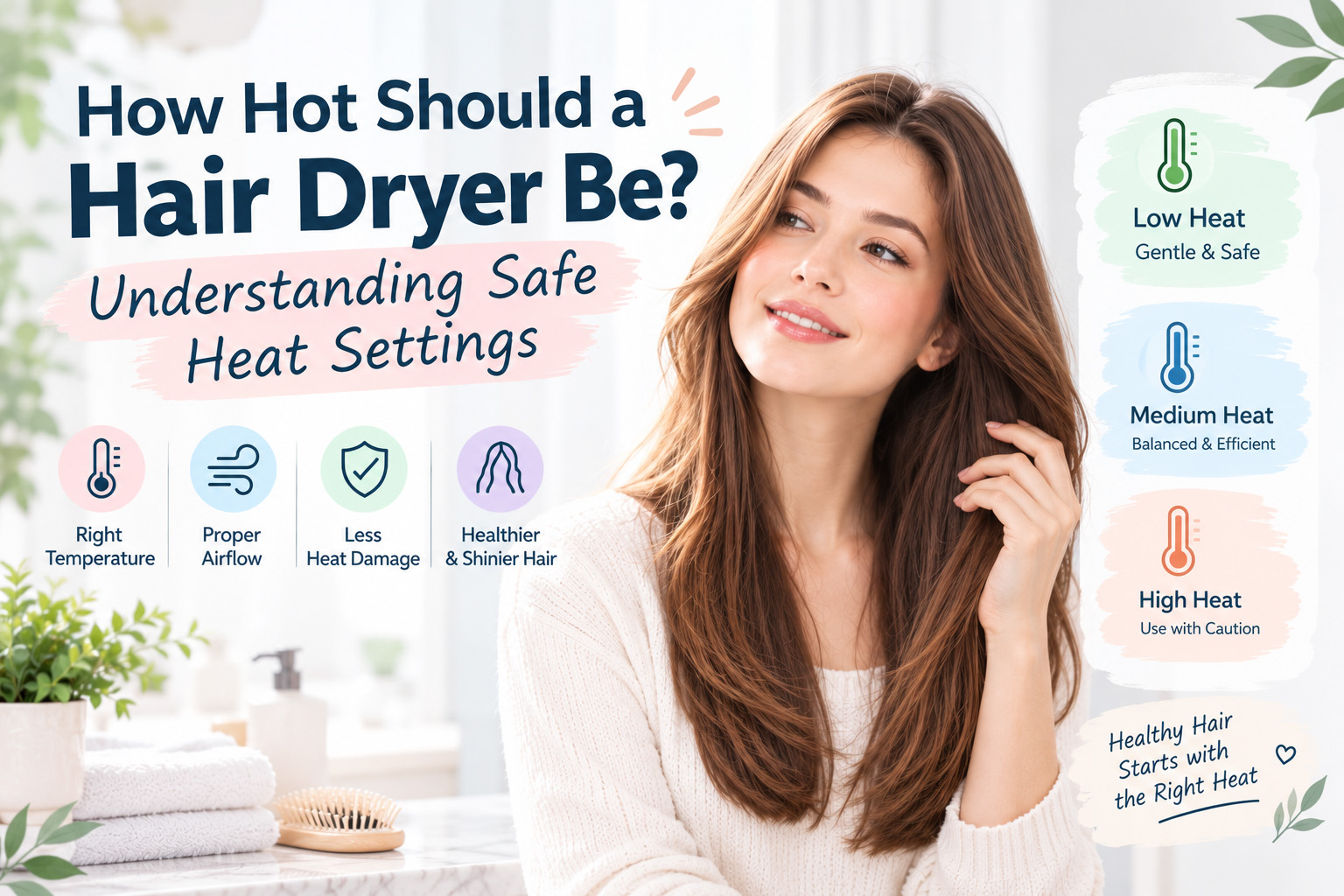
3. Choose the Right Hair Dryer Temperature
One of the most important answers to how to use a hair dryer without damaging your hair is controlling temperature.
You do not need to use the highest heat setting to dry your hair quickly.
because excessive heat can damage hair regardless of hair type.
What Is the Best Hair Dryer Temperature?
There is no single temperature that works perfectly for everyone.
A practical approach is:
| Hair Type | Suggested Approach |
|---|---|
| Fine hair | Low to medium heat |
| Thin hair | Low to medium heat |
| Straight hair | Medium heat with controlled airflow |
| Wavy hair | Low to medium heat |
| Curly hair | Low to medium heat with diffuser |
| Thick hair | Moderate heat with strong but controlled airflow |
| Damaged hair | Lowest comfortable heat |
The goal is to use the lowest effective heat that allows you to complete your styling efficiently.

4. Keep the Hair Dryer at a Safe Distance
Holding a hair dryer too close to your hair can create concentrated heat exposure.
A commonly cited hair-drying study compared different temperatures and distances. It found greater surface damage at higher temperatures and closer distances. The researchers reported that drying at approximately 15 cm with continuous movement produced less damage than some closer, higher-temperature conditions.
For everyday styling, avoid placing the nozzle directly against your hair.
How Far Should You Hold a Hair Dryer From Your Hair?
A practical starting point is around 15 cm (about 6 inches) away.
Adjust the distance based on airflow strength, temperature, hair type, and comfort.
If the airflow feels excessively hot on your scalp or hair, increase the distance or reduce the temperature.
5. Keep the Hair Dryer Moving
Never concentrate hot airflow on one small section for too long.
Move the dryer continuously across the hair.
This distributes heat more evenly and reduces prolonged exposure to one area.
When searching for how to use a hair dryer without damaging your hair, this is one of the most important techniques to remember:
Moderate heat + proper distance + continuous movement = better heat control.
The study on hair shaft damage specifically found that continuous movement at an appropriate distance could reduce surface damage compared with more concentrated drying.
6. Use the Right Airflow Setting
Heat is only one part of the drying process.
Airflow speed also affects how you control the dryer.
Consumer Reports notes that different heat and speed settings allow users to adapt drying and styling to different hair types and styling needs. Lower speed can provide greater styling control, while higher airflow can be useful for rough drying.
Should You Use High or Low Airflow?
For initial rough drying, stronger airflow can help remove water efficiently.
For detailed styling, lower or moderate airflow can provide better control.
If you have fine or thin hair, extremely strong airflow may make the hair difficult to control and can reduce volume.
7. Use a Concentrator for Smooth Styling
A concentrator nozzle directs airflow toward a specific section of hair.
It can be useful when you want a smoother finish or are using a brush while blow drying.
Instead of blasting the entire head with high airflow, the concentrator allows you to direct air where it is needed.
How to Use a Concentrator Nozzle
- Divide your hair into manageable sections.
- Start with a low or medium heat setting.
- Position the dryer several inches away.
- Direct airflow from the roots toward the ends.
- Keep the dryer moving.
- Avoid repeatedly heating the same section.
This technique can help create a smoother appearance while reducing unnecessary heat exposure.
8. Use a Diffuser for Curly or Wavy Hair
If you have curly or wavy hair, a diffuser can distribute airflow more gently.
Consumer Reports recommends choosing a dryer that can accommodate a quality diffuser for curly hair types.
A diffuser can help reduce the intensity of direct airflow and support curl definition.
How to Blow Dry Curly Hair Without Damage
For curly hair:
- Use low or medium heat.
- Use a diffuser attachment.
- Avoid excessive touching.
- Avoid repeatedly drying the same section.
- Let curls dry gradually.
- Finish with cool air when appropriate.
If your curls are fragile or chemically treated, using lower heat and reducing drying frequency can be particularly important.
9. Dry the Roots and Ends Differently
Not every part of your hair needs the same treatment.
The roots generally contain more moisture after washing, while the ends are often older and more fragile.
When drying your hair, focus airflow where moisture remains without continuously overheating the ends.
How to Dry Hair Ends Without Damage
The ends are often more prone to dryness and split ends.
Use moderate airflow and avoid holding the dryer close to the ends.
If your hair is already dry or damaged, consider using lower heat and reducing how often you use heat styling.
10. Finish With Cool Air
Many modern hair dryers include a cool-shot function.
Cool airflow can be useful after styling and may help set the finished shape.
Consumer Reports notes that the cold setting can be used after styling to help set curls or shape.
A simple routine is:
Warm airflow → Style → Reduce heat → Finish with cool airflow
This gives you greater control over the final styling process.
How to Use a Hair Dryer for Different Hair Types
Different hair types have different drying needs.
Understanding your hair type can help you decide how much heat and airflow to use.
How to Use a Hair Dryer for Fine Hair
Fine hair is more sensitive to excessive heat and can easily become flat.
Use:
- Low to medium heat
- Moderate airflow
- Lightweight dryer
- Concentrator for smooth styling
- Cool shot for finishing
Avoid automatically using maximum heat simply because your hair feels slow to dry.
How to Use a Hair Dryer for Thin Hair
Thin hair refers primarily to hair density rather than individual strand diameter.
If your hair is thin, focus on volume without excessive heat.
Try lifting the roots gently while using moderate airflow.
Avoid pressing the dryer directly against the scalp.
For additional volume, dry the roots in different directions before finishing the outer layer.
How to Use a Hair Dryer for Thick Hair
Thick hair generally takes longer to dry.
Instead of immediately increasing the temperature to maximum, remove as much water as possible first.
Use stronger airflow during the rough-drying stage and switch to more controlled airflow during styling.
A dryer with multiple heat and speed settings can make this process easier. Consumer Reports recommends choosing models with multiple temperature/speed settings and appropriate attachments for different hair types.
How to Use a Hair Dryer for Curly Hair
Curly hair can benefit from a diffuser and controlled airflow.
Start with lower heat and avoid excessive manipulation.
Allow the diffuser to support the curls instead of aggressively brushing or pulling through them.
This can help maintain the natural curl pattern while reducing unnecessary mechanical stress.
Common Hair Dryer Mistakes That Cause Damage
Knowing how to use a hair dryer without damaging your hair also means knowing what to avoid.
Mistake 1: Using Maximum Heat Every Day
Higher heat does not automatically mean faster or better styling.
Excessive heat can increase surface damage over time.
Use the lowest effective temperature instead.
Mistake 2: Holding the Dryer Too Close
A very short drying distance can concentrate heat on a small area.
Keep the dryer moving and maintain a reasonable distance.
Mistake 3: Drying One Section for Too Long
Even a moderate temperature can become excessive if applied continuously to one section.
Move the dryer continuously.
Mistake 4: Roughly Rubbing Wet Hair
Wet hair is more fragile.
Instead of aggressively rubbing with a towel, gently wrap your hair to absorb water.
Mistake 5: Ignoring Hair Dryer Maintenance
A dirty or blocked filter can restrict airflow and potentially contribute to overheating.
Consumer Reports recommends checking and cleaning the filter according to the manufacturer's instructions.
Regular maintenance can also help your hair dryer maintain consistent performance.
What Features Should a Hair Dryer Have?
If you are looking for a hair dryer that supports a lower-damage styling routine, consider the following features.
Adjustable Heat Settings
Multiple temperature settings give you more control.
Consumer Reports recommends at least three heat settings so users can adjust the dryer for different hair types and styling needs.
Adjustable Speed Settings
Different airflow levels allow you to switch between fast rough drying and controlled styling.
Cool Shot
A cool-air function is useful for finishing and setting styles.
Concentrator Attachment
A concentrator is useful for smooth, directional styling.
Diffuser Attachment
A diffuser can be particularly useful for curly and wavy hair.
Comfortable Weight and Ergonomics
A lightweight, balanced dryer can make longer styling sessions easier to control.
Consumer Reports evaluates hair dryers on factors including performance, ease of use, weight, noise, air temperature, and available settings.
Does Ionic Technology Prevent Hair Damage?
Ionic technology is often marketed as a solution for frizz and faster drying.
However, ionic technology should not be viewed as a guarantee against heat damage.
The most important factors are still:
- Temperature control
- Drying distance
- Airflow
- Drying time
- Hair preparation
- Styling technique
- Frequency of use
In other words, an ionic hair dryer can be useful, but how you use a hair dryer remains important.
How Often Can You Use a Hair Dryer?
There is no universal number of uses that guarantees no damage.
Your hair type, heat setting, drying time, distance, and overall hair condition all matter.
If you use a hair dryer every day, focus on reducing unnecessary heat exposure.
Try to:
- Remove excess water first.
- Use heat protectant.
- Use low or medium heat.
- Keep the dryer moving.
- Maintain distance.
- Avoid repeated passes over the same section.
- Use cool air to finish.
- Give your hair occasional breaks from heat styling.
How to Use a Hair Dryer Without Damaging Your Hair: Quick Routine
For a simple everyday routine, follow this sequence:
Step 1: Wash and Condition
Use conditioner appropriate for your hair type.
Step 2: Remove Excess Water
Gently squeeze and wrap the hair instead of rubbing aggressively.
Step 3: Apply Heat Protectant
Distribute the product evenly.
Step 4: Partially Air Dry
Allow some moisture to evaporate naturally when your schedule allows.
Step 5: Start With Low or Medium Heat
Avoid maximum heat unless there is a specific reason to use it.
Step 6: Maintain Distance
Keep the dryer several inches away from your hair.
Step 7: Keep Moving
Never hold hot airflow continuously on one section.
Step 8: Style With the Right Attachment
Use a concentrator for smooth styling or a diffuser for curls and waves.
Step 9: Finish With Cool Air
Use cool airflow to finish the style.
Step 10: Turn Off and Maintain the Dryer
Allow the device to cool and clean the filter according to the manufacturer's instructions.
Frequently Asked Questions
Is it better to air dry or blow dry hair?
Neither method is automatically best for every situation.
Excessive heat from blow drying can damage hair, but prolonged wetness can also place stress on the hair. A study found that appropriate blow-drying technique, including greater distance and continuous movement, may reduce surface damage compared with some natural-drying conditions.
The practical approach is to avoid excessive heat and avoid unnecessarily prolonged wetness.
What is the safest heat setting for a hair dryer?
Low to medium heat is generally a sensible starting point for everyday styling.
The AAD specifically recommends low or medium heat to help reduce heat damage.
The exact setting should depend on your hair type, density, moisture level, and styling needs.
How far should a hair dryer be from your hair?
Around 15 cm, or approximately 6 inches, is a useful starting point.
A study found that drying at 15 cm with continuous movement caused less hair surface damage than closer, higher-temperature conditions tested in the experiment.
Can I use a hair dryer every day without damaging my hair?
Daily use may increase cumulative heat exposure, but technique makes a significant difference.
Use lower or medium heat, maintain distance, keep the dryer moving, and minimize unnecessary drying time.
Should I use heat protectant before blow drying?
Yes, a suitable heat-protective product can be a useful part of a heat-styling routine.
However, heat protectant should not be considered a substitute for controlling temperature and drying time. The AAD recommends both using heat protection and reducing excessive heat exposure.
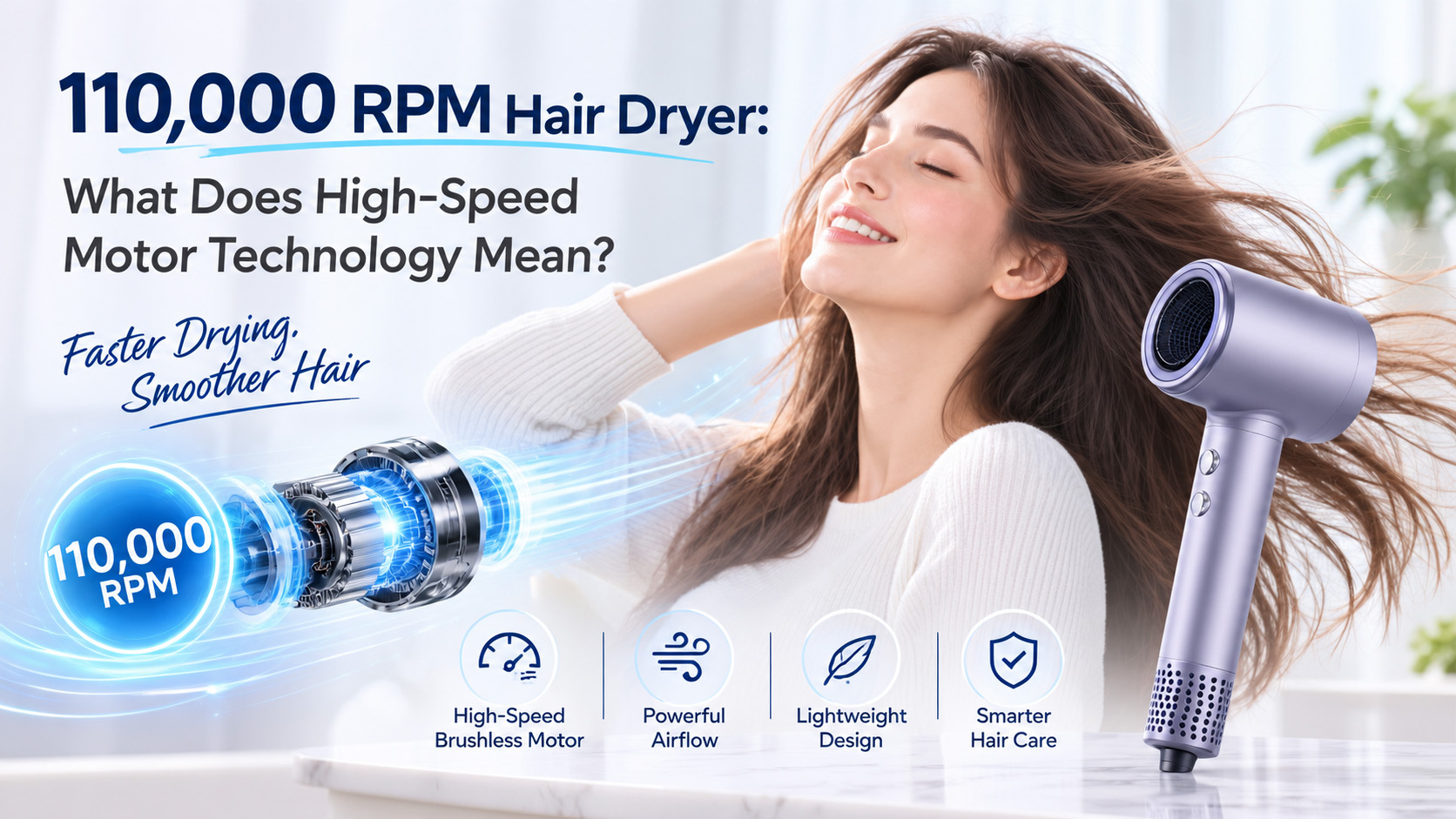
Is a high-speed hair dryer better for preventing damage?
Not necessarily.
A high-speed dryer may reduce drying time, but overall hair exposure also depends on temperature, distance, airflow control, and technique.
The goal is not simply maximum speed. The goal is efficient drying with controlled heat exposure.
Final Thoughts: How to Use a Hair Dryer Without Damaging Your Hair
Learning how to use a hair dryer without damaging your hair is mainly about controlling heat and reducing unnecessary stress on your hair.
The most important habits are simple:
- Remove excess water before blow drying.
- Use heat protectant.
- Choose low or medium heat.
- Keep the dryer several inches away.
- Keep the airflow moving.
- Avoid repeatedly heating one section.
- Choose the right attachment for your hair type.
- Finish with cool air when appropriate.
- Clean the hair dryer filter regularly.
- Reduce heat styling when your hair needs a break.
A hair dryer does not automatically mean damaged hair. With the right technique and a dryer that offers adjustable heat and airflow, you can create your desired style while taking better care of your hair.

📬 Contact Information
Contact Person: Jenny
Tel / WhatsApp / WeChat: +86 137 1719 2238
Address: No. 12, Donghuan 2nd Road, Huangjiang Town, Dongguan, Guangdong, China
For partnership inquiries, distribution, private label OEM, or large-scale projects, please reach out directly.
Welcome to Hongya!
17+ years OEM/ODMproduction experience.
Main products include: HairDryers, Hot Air Brush, HairStraighteners, Hair Curlers,Hair Straightener Brushes,etc.
20+R&D staff
280+ employees.
15000+ ㎡ factories.
100,000+ PCS MonthlyProduction.
Currently developing200+ products.
Patents/Certifications support Online Query.

How Hot Should a Hair Dryer Be? Understanding Safe Heat Settings
How to Choose a Hair Dryer for Fine, Thin Hair
Related Article
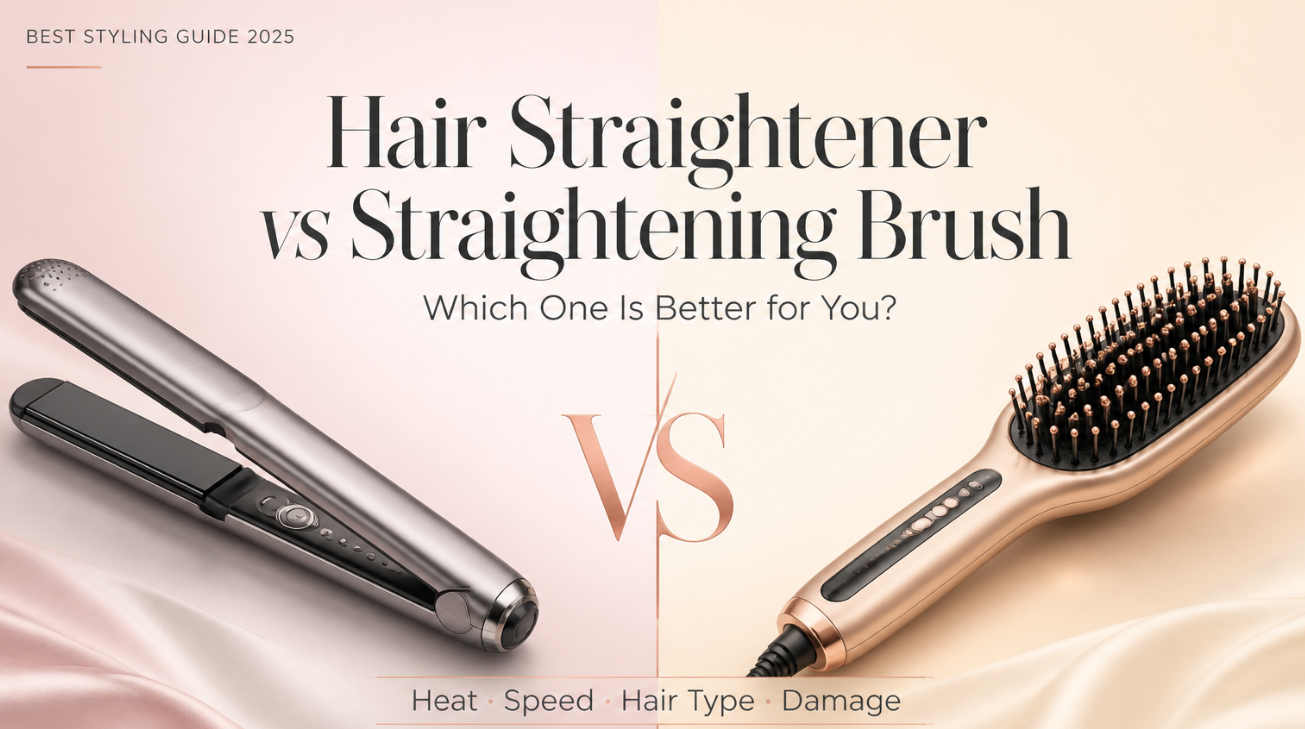
This guide breaks down the real differences so you can pick the right tool with confidence.