How to Dry Long Hair Fast Without Causing Split Ends
How to Dry Long Hair Fast Without Causing Split Ends
Long hair can look beautiful, but drying it can take a lot of time. When hair stays wet for too long or is exposed to excessive heat, it can become dry, rough, and more prone to breakage and split ends.
So, how to dry long hair fast without causing split ends?
The key is not simply using the hottest temperature or the strongest airflow. A better approach combines proper pre-drying preparation, powerful airflow, controlled heat, suitable hair dryer settings, and the right drying technique.
In this guide, you will learn how to:
- Dry long hair faster
- Reduce unnecessary heat exposure
- Minimize frizz and breakage
- Choose the right hair dryer settings
- Protect the ends of long hair
- Build a faster and more hair-friendly drying routine

Why Does Long Hair Take So Long to Dry?
Long hair naturally contains more strands and holds more water than short hair. Thick or dense hair can take even longer because moisture remains trapped between layers.
Several factors affect drying time:
- Hair length
- Hair thickness
- Hair density
- Hair porosity
- Amount of water after washing
- Hair dryer airflow
- Drying technique
If you rely only on high heat to speed up the process, you may increase unnecessary heat exposure. This is why knowing how to dry long hair fast without causing split ends is important for maintaining healthier-looking hair.
Can Blow-Drying Cause Split Ends?
Does Heat Damage Hair?
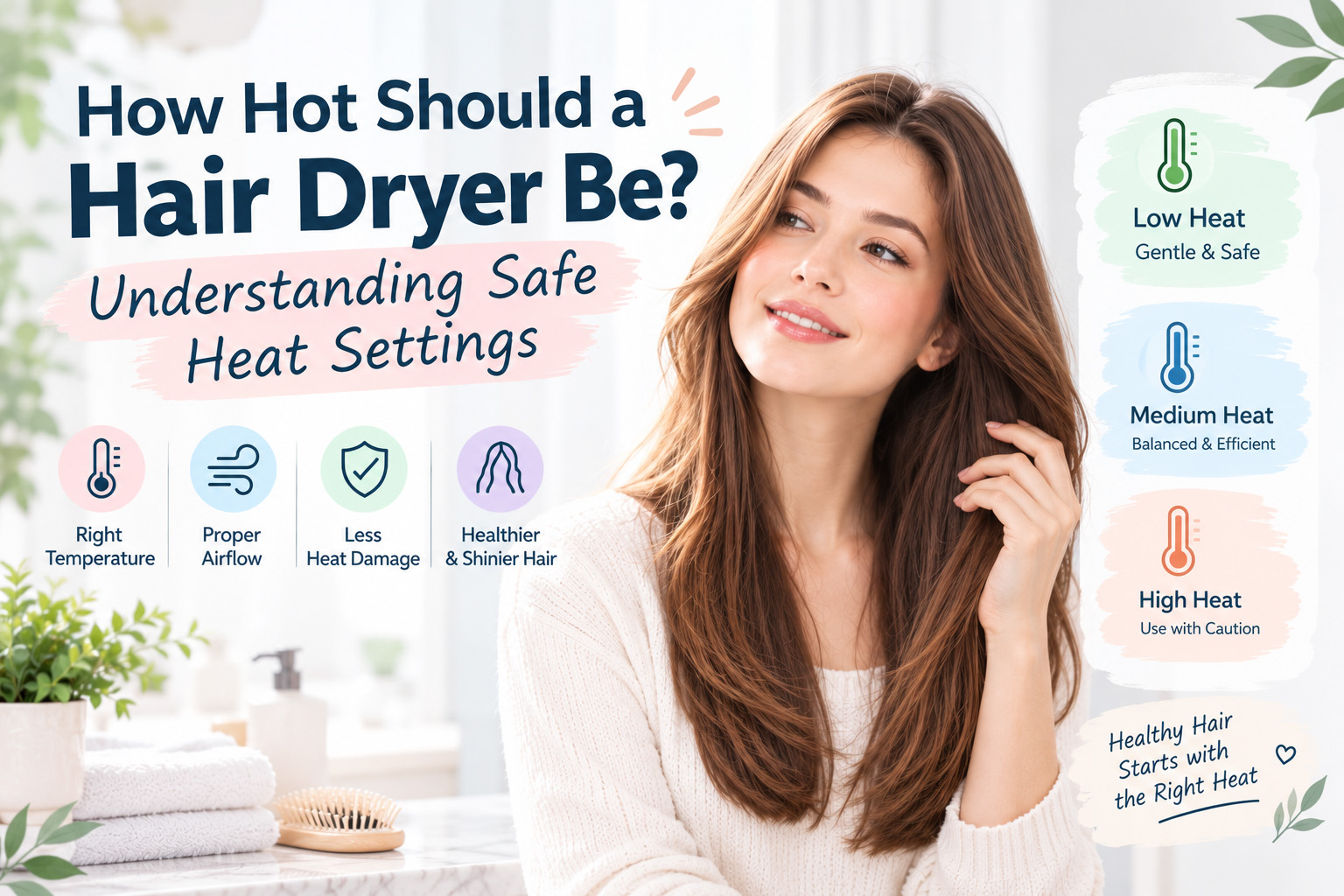
Blow-drying itself does not automatically cause split ends. However, excessive heat, prolonged drying, and rough handling can contribute to hair damage.
Repeated heat exposure may make the hair surface drier and weaker over time. Damaged ends are more likely to become rough, split, or break.
For this reason, the goal should be:
Faster drying + controlled heat + gentle handling
rather than simply using maximum heat.
How to Dry Long Hair Fast Without Causing Split Ends
Step 1: Remove Excess Water First
One of the easiest ways to shorten drying time is to remove excess water before using your hair dryer.
After washing:
- Gently squeeze out excess water.
- Wrap your hair in a soft, absorbent towel.
- Press rather than aggressively rubbing the hair.
- Leave it wrapped briefly before blow-drying.
Avoid vigorous towel rubbing because wet hair is more vulnerable to mechanical damage.
Why This Helps
The less water your hair contains before blow-drying, the less time it needs to be exposed to airflow and heat.
Step 2: Apply a Heat Protectant
If you frequently use a hair dryer, applying a suitable heat protectant can help reduce the effects of styling heat.
Apply it evenly from the mid-lengths toward the ends, especially if your hair is:
- Long
- Dry
- Color-treated
- Chemically treated
- Frequently heat-styled
Allow the product to distribute evenly before drying.
Step 3: Divide Long Hair Into Sections
Trying to dry all your hair at once can make the process inefficient.
Instead, divide your hair into several manageable sections.
Recommended Order
- Lower layers
- Middle layers
- Upper layers
- Front and fringe areas
Working in sections allows airflow to reach wet areas more efficiently.
It also prevents you from repeatedly drying already-dry hair while searching for moisture underneath.
Step 4: Use Strong Airflow Instead of Excessive Heat
One of the most important answers to how to dry long hair fast without causing split ends is to prioritize airflow.
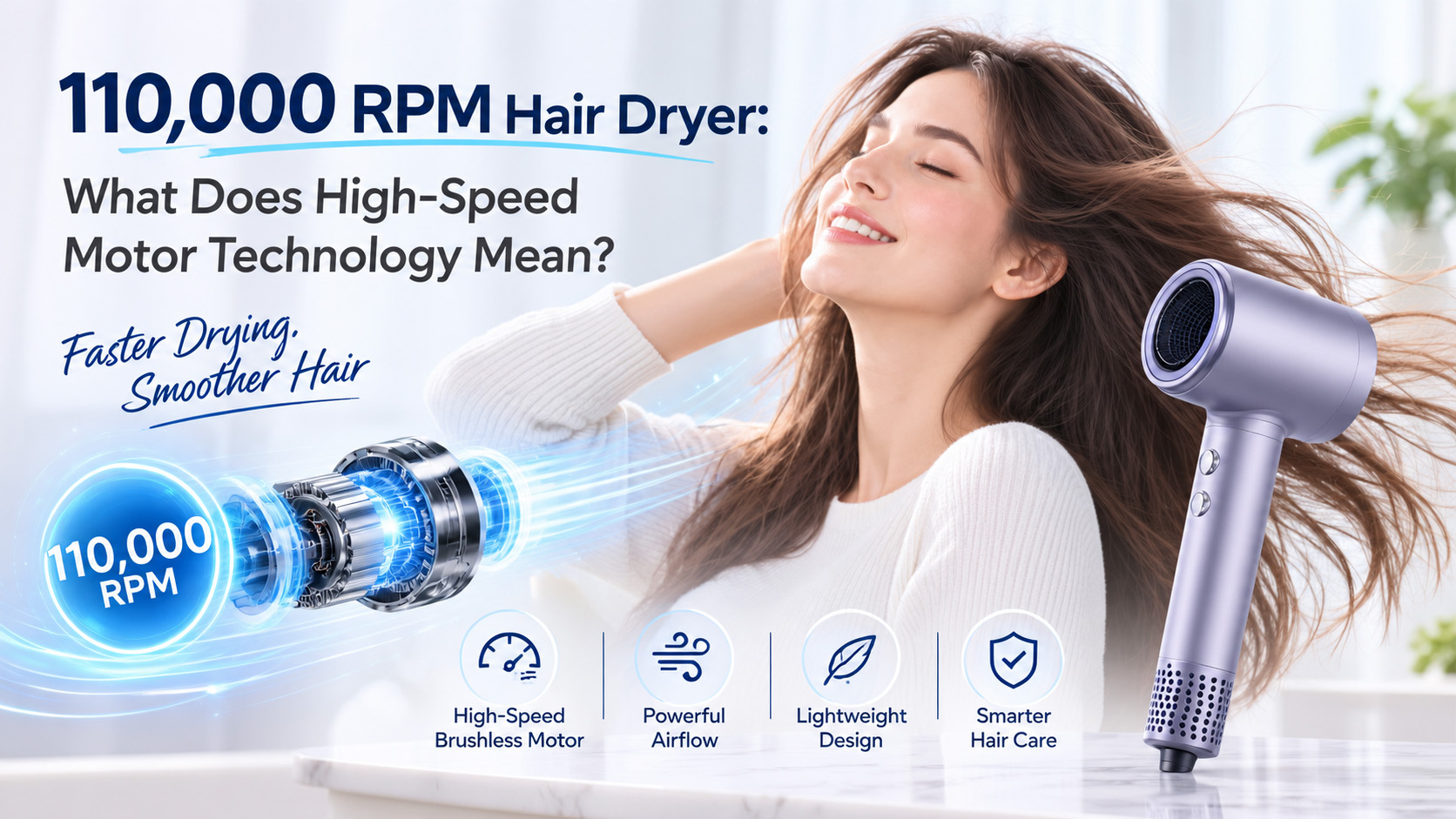
A high-speed hair dryer can move a large volume of air across the hair, helping remove moisture more quickly.
Instead of immediately choosing the highest heat setting, try:
- Medium heat
- High airflow
- Continuous movement
This combination can help shorten drying time while reducing unnecessary exposure to intense heat.
Step 5: Keep the Hair Dryer Moving
Do not hold the hair dryer in one position for too long.
Keep the airflow moving across each section.
A good technique is:
Roots → Mid-lengths → Ends
Move gradually while maintaining a comfortable distance between the dryer and your hair.
This helps distribute heat more evenly and reduces the chance of overheating a small area.
Step 6: Protect the Ends of Long Hair
The ends are usually the oldest and most fragile part of long hair.
They have experienced more:
- Washing
- Brushing
- Sun exposure
- Heat styling
- Chemical treatments
- Friction
Therefore, pay special attention when drying the ends.
How to Dry Hair Ends Safely
Use:
- Lower or medium heat
- Controlled airflow
- Continuous movement
- A suitable heat protectant
Avoid concentrating very hot airflow directly on the tips for an extended period.
Step 7: Use a Concentrator Nozzle for Straight Styles
If your goal is smooth, straight hair, a concentrator nozzle can help direct airflow more precisely.
Position the nozzle so the airflow travels along the hair rather than blowing randomly from different directions.
With a paddle brush or round brush, you can create:
- Smoother hair
- A polished blowout
- Less visible flyaways
- Better control over the ends
A focused airflow can also make section-by-section styling more efficient.
Step 8: Use a Diffuser for Curly or Wavy Long Hair
If you have naturally curly or wavy long hair, a diffuser can provide a better drying method than directing strong airflow directly at the curls.
A diffuser helps distribute airflow across a larger area.
It can help:
- Reduce excessive airflow disruption
- Maintain curl shape
- Control frizz
- Improve natural texture
Use a lower or medium heat setting and avoid excessive manipulation while the hair is drying.

What Is the Best Hair Dryer Setting for Long Hair?
There is no single setting that works for everyone. Your ideal combination depends on your hair type and condition.
| Hair Type | Airflow | Heat | Recommended Approach |
|---|---|---|---|
| Fine hair | Medium | Low–Medium | Gentle, controlled drying |
| Normal hair | Medium–High | Medium | Balance speed and heat |
| Thick hair | High | Medium | Prioritize airflow |
| Dry or damaged hair | Medium | Low–Medium | Minimize heat exposure |
| Curly hair | Low–Medium | Low–Medium | Use a diffuser |
The general principle is simple:
Use airflow to remove moisture and heat to assist the process—not heat alone to do all the work.
How to Choose the Best Hair Dryer for Long Hair
Look for a High-Speed Motor
A powerful motor can provide stronger airflow, which is especially useful for long and thick hair.
A high-speed hair dryer can help reduce drying time without requiring extremely high temperatures.
Choose Adjustable Heat and Speed Settings
A good hair dryer should give you control over:
- Airflow speed
- Temperature
- Cool shot
This allows you to adapt the drying process to different hair conditions.
Consider Intelligent Temperature Control
Advanced hair dryers may use temperature monitoring technology to help maintain a more consistent airflow temperature.
This is useful when you want to:
- Reduce overheating
- Protect dry hair
- Improve everyday styling
Consider Ionic or Plasma Technology
Some modern hair dryers use negative ion or plasma hair care technology.
These technologies are designed to help:
- Reduce static
- Control frizz
- Improve smoothness
- Create a shinier-looking finish
For long hair that becomes frizzy after blow-drying, these features can be particularly useful.
How Long Should It Take to Dry Long Hair?
Drying time varies significantly depending on hair length, thickness, density, starting moisture, and hair dryer performance.
As a general guideline:
- Fine, long hair may dry relatively quickly.
- Medium-density long hair may require more time.
- Thick or very dense long hair can take considerably longer.
A high-airflow hair dryer can significantly reduce drying time compared with a low-airflow model.
The goal should not be to achieve the fastest possible drying time at any cost. The goal is to dry efficiently while keeping heat exposure controlled.
Common Mistakes That Can Lead to Hair Damage
Using Maximum Heat From Start to Finish
High heat may seem like the fastest option, but prolonged high temperatures can increase stress on the hair.
Better approach: Use stronger airflow and moderate heat whenever possible.
Drying the Ends First
The roots generally contain more moisture and often require more drying time.
Starting from the roots and working toward the ends can make the process more efficient.
Holding the Dryer Too Close
Very concentrated heat can create excessive temperature on a small area.
Keep the dryer moving and follow the manufacturer's recommended operating distance.
Rubbing Wet Hair Aggressively
Wet hair is more vulnerable to mechanical stress.
Use gentle squeezing and blotting instead of vigorous rubbing.
Brushing Wet Hair Too Aggressively
If you need to detangle your hair, use a suitable wide-tooth comb or detangling brush and work gently from the ends upward.
How to Dry Long Hair Fast Without Causing Split Ends: A Simple Routine
For a quick everyday routine, follow these steps:
Before Drying
1. Remove excess water
Gently squeeze and towel-dry.
2. Apply heat protectant
Focus on mid-lengths and ends.
3. Detangle gently
Start from the ends and work upward.
During Drying
4. Divide hair into sections
5. Start with the roots
6. Use strong airflow with moderate heat
7. Keep the dryer moving
8. Protect the ends from prolonged heat
Finishing
9. Switch to cool air
10. Check that the hair is completely dry
This routine can make long-hair drying faster without relying entirely on high temperatures.
Does Cutting Hair Prevent Split Ends?
Can Split Ends Be Repaired?
Once a hair strand has physically split, hair products cannot permanently fuse the strand back together.
Conditioners, masks, serums, and leave-in treatments can improve the appearance and feel of damaged hair, but trimming is the reliable way to remove existing split ends.
That is why prevention matters.
A good drying routine can help reduce additional mechanical and heat stress, while regular trims help manage existing split ends.
Frequently Asked Questions
How can I dry my long hair quickly?
Remove excess water first, divide your hair into sections, and use a hair dryer with strong airflow and adjustable heat. Focus on airflow rather than maximum temperature.
What is the best hair dryer for long hair?
A high-speed hair dryer with strong airflow, adjustable heat and speed settings, and intelligent temperature control is a good choice for long hair.
Is it better to air-dry or blow-dry long hair?
Both methods have advantages and disadvantages. Air-drying eliminates direct heat exposure but can take a long time. Controlled blow-drying can remove moisture faster when used correctly.
Does a high-speed hair dryer damage hair?
Not necessarily. A high-speed hair dryer can reduce drying time by using powerful airflow. However, excessive heat or incorrect use can still contribute to hair damage.
How do I dry long hair without making it frizzy?
Use a heat protectant, direct airflow from roots toward the ends, avoid excessive heat, and finish with cool air. An ionic or plasma hair dryer may also help control static and frizz.
Should I use a concentrator nozzle on long hair?
Yes. A concentrator nozzle is useful when you want a smooth, straight blowout. It focuses airflow and works particularly well with a paddle or round brush.
Final Thoughts
Learning how to dry long hair fast without causing split ends is mainly about using the right technique rather than simply increasing the heat.
Start by removing excess water, apply heat protection, divide your hair into sections, and use a hair dryer with strong airflow and controlled temperature. Keep the dryer moving and pay extra attention to the ends, where long hair is most vulnerable to damage.
For long or thick hair, a high-speed hair dryer can be especially useful because stronger airflow can shorten drying time without requiring maximum heat.

📬 Contact Information
Contact Person: Jenny
Tel / WhatsApp / WeChat: +86 137 1719 2238
Address: No.27, Bei'an South Road. HuangjiangTown,Dongguan city
For partnership inquiries, distribution, private label OEM, or large-scale projects, please reach out directly.
Welcome to Hongya!
17+ years OEM/ODMproduction experience.
Main products include: HairDryers, Hot Air Brush, HairStraighteners, Hair Curlers,Hair Straightener Brushes,etc.
20+R&D staff
280+ employees.
15000+ ㎡ factories.
100,000+ PCS MonthlyProduction.
Currently developing200+ products.
Patents/Certifications support Online Query.

Quiet Hair Dryers: Low Noise Models for Home Use
Difference Between 110V and 220V Hair Dryers for International Travel
Related Article
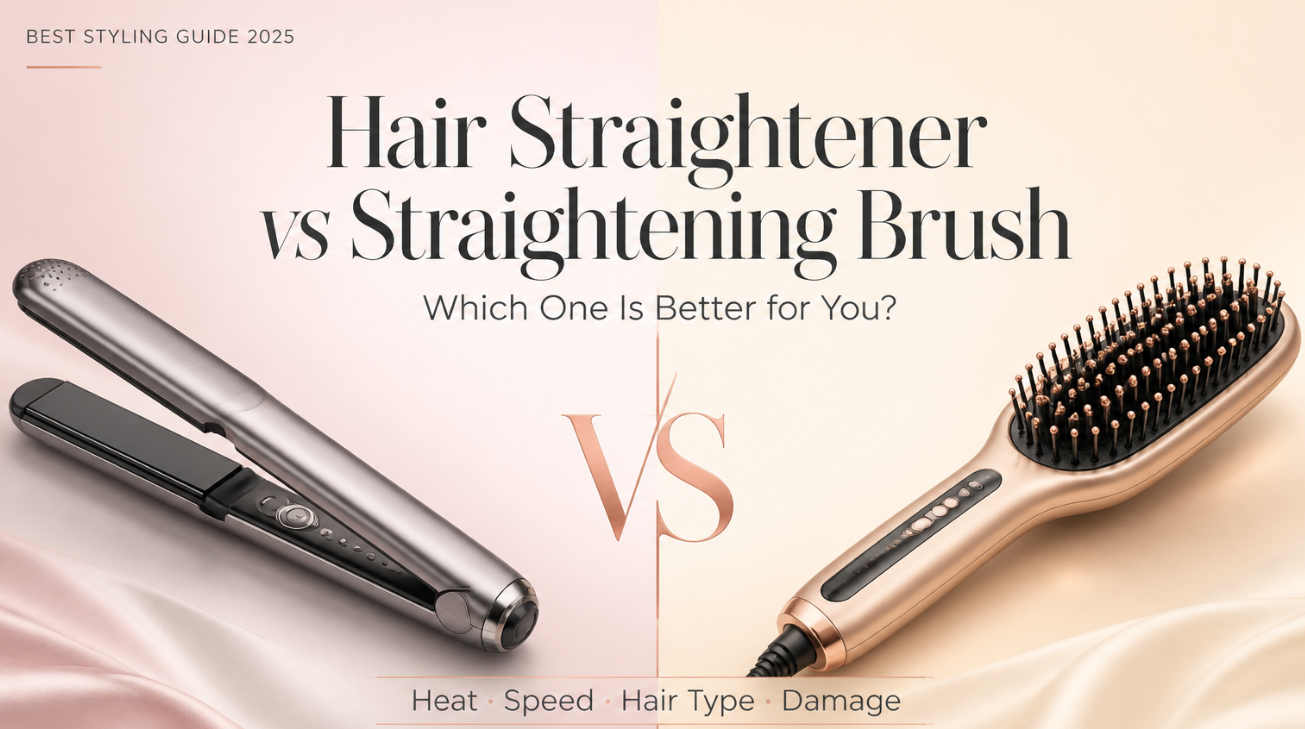
This guide breaks down the real differences so you can pick the right tool with confidence.